Decor – Decorating a Girl’s Bedroom (from birth to teenager)

When I look back on the photos of my daughter’s bedroom throughout the years, I see how she has changed and grown.  When she was a baby/toddler we lived in California and her room was decorated in soft colors with stuffed animals and porcelain dolls on the shelves.  As a small child, most of the decorating style was determined by me.   Then when we moved to the Midwest her room was decorated first decorated in soft blue and green (even briefly a leopard and tiger print phase!) for a pre-teen and then bold dark pink and black chalkboard paint for a teenager.  As a teenager, she had very definite opinions about how she wanted her room decorated and she selected everything.  In this post, I will discuss how her bedroom decorations have changed over the last sixteen years.

 Baby/toddler bedroom –

Before our daughter was born I knew I wanted soft colors to decorate her first bedroom, so I selected pale sage green, rosy pink and white.  The furniture in the room included a simple crib of light wood accented with dark wood and two matching dressers.  The large closet had mirrored sliding doors with plenty of room inside to hang clothes and store her numerous toys, our daughter loved to play dress-up and dancing in front of the mirrors.  For some reason I could not find a photo of the crib, but it was made with sage green sheets and a baby bumper.  Later a twin bed was exchanged for the crib as she grew older.

Positioned above the crib was a long white shelf with several of our daughter’s stuffed animal collection on display, attached to the shelf was a long rod which was used to hang a quilt.  The shelf and rod unit was made by my husband and it was a great project for him to get involved in decorating our daughter’s room.  The project was very easy and it only took him the weekend to assemble.  He used two wooden brackets, a long wooden plank cut for the shelf and two additional pieces cut to attach the brackets, a long wooden rod, two wooden finials and a can of white paint.

2000 Cassie bedroom 2

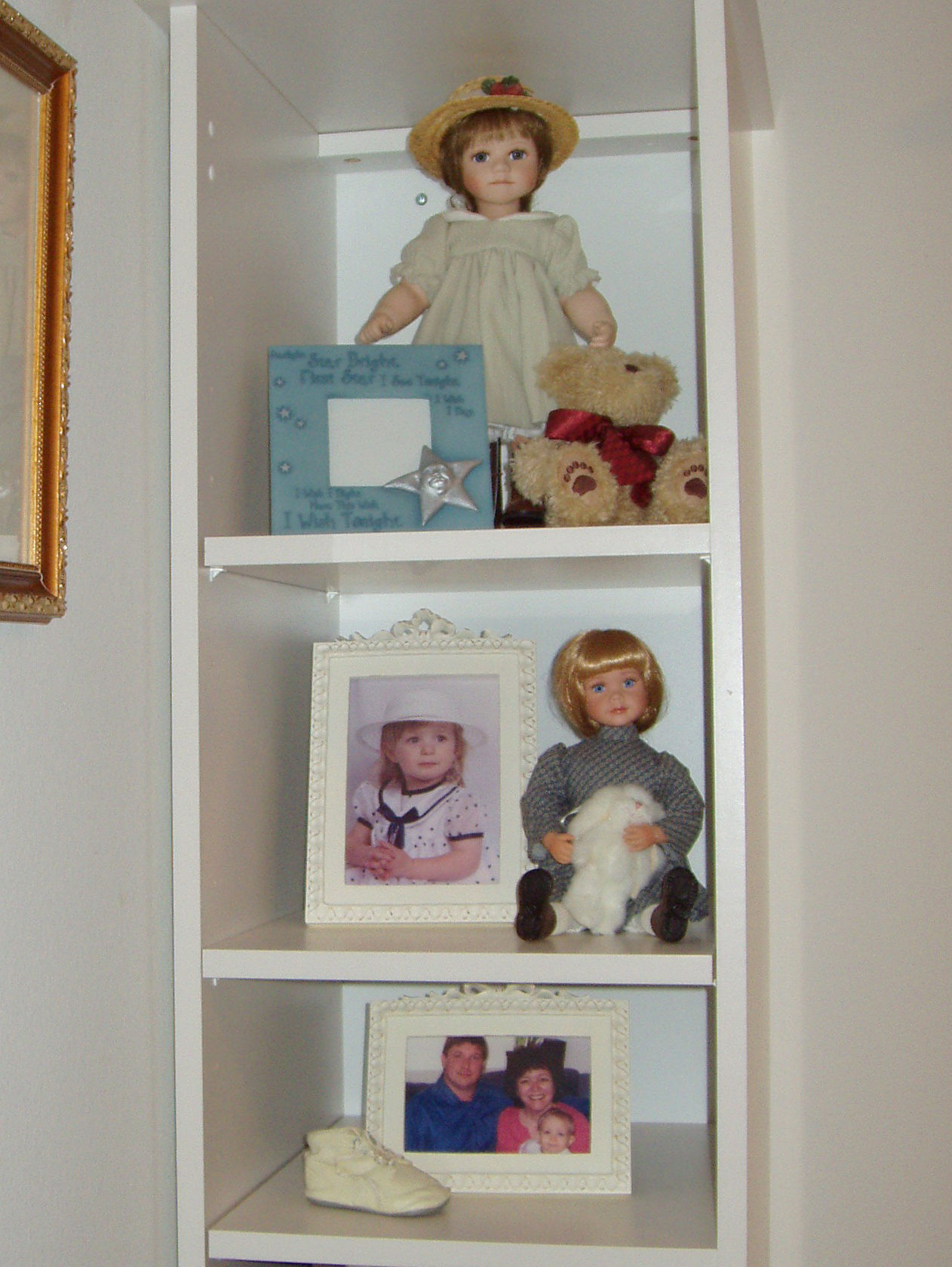
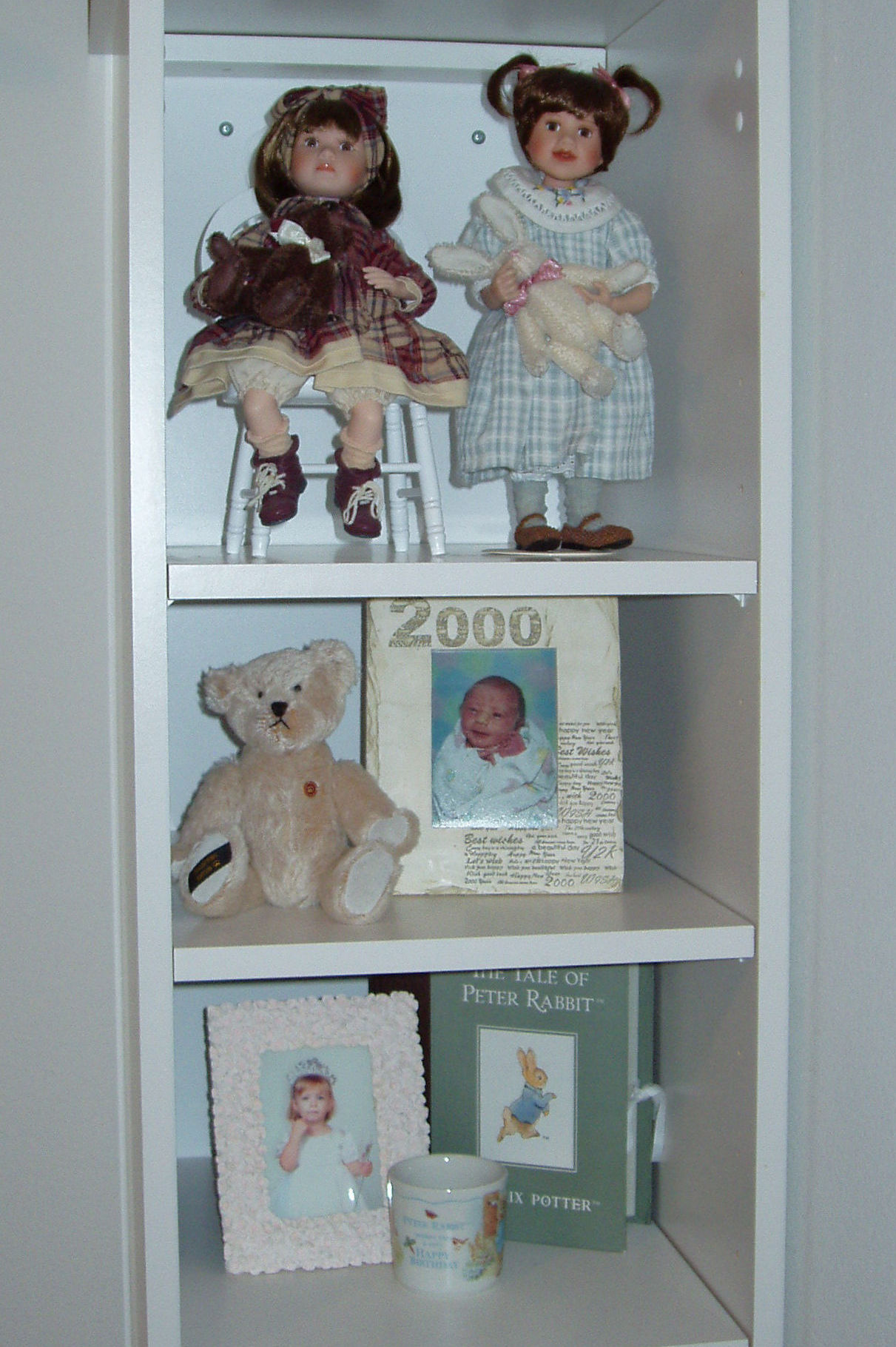
On either side the crib were two tall and narrow shelves with cabinets.  On the shelves I placed several porcelain dolls, picture frames with favorite photos of our daughter and other decorative items.  I love to fill the rooms of our home with photos that were taken of special occasions or to capture a moment in our lives; my daughter’s bedroom was no exception.  The dolls were collected for my daughter and I hope that someday she will have them to look at and have some beautiful memories of her childhood.

2000 Cassie bedroom 3    2000 Cassie bedroom 4

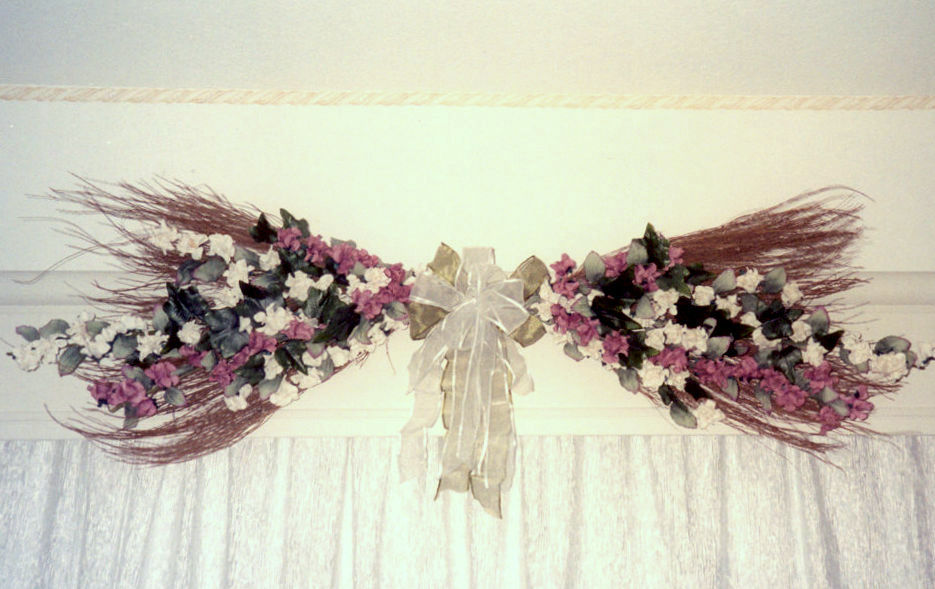
On the other side of the room, placed below the window was a dresser.  On top of the dresser was an antique crocheted linen, a table lamp, a small piggy bank (every child needs one right?) and a basket filled with Boyd’s Bears.  Above the window was a wooden cornice painted white and attached was a twig spray floral arrangement.  I enjoy making floral arrangements and I have several throughout our home, it is one of my favorite hobbies.  For my daughter’s room, I used a twig spray as the base and I decorated it with ivy, eucalyptus, white and pink floral sprays and accented with a sage green bow.

2000 Cassie bedroom 62000 Cassie bedroom 5

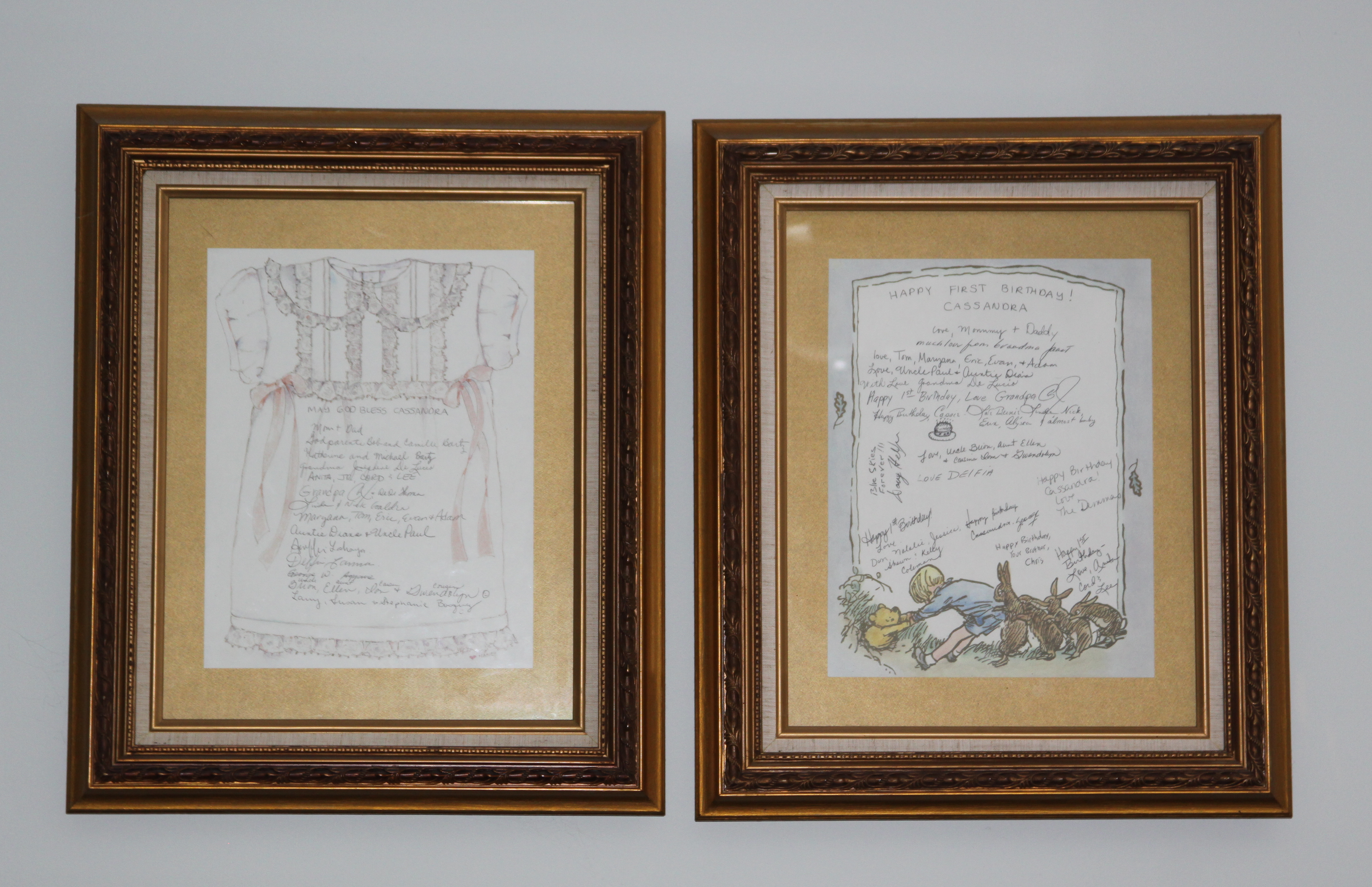
On the walls of the bedroom were framed artwork, two special ones which commemorated our daughter’s baptism and her first birthday.  These were a very easy craft project using gold mats, scrapbook paper signed by the guests at the events which were placed in gold frames.  (For more information, please click on the décor post – Not Your Normal Wall Art!)

Childhood events framed

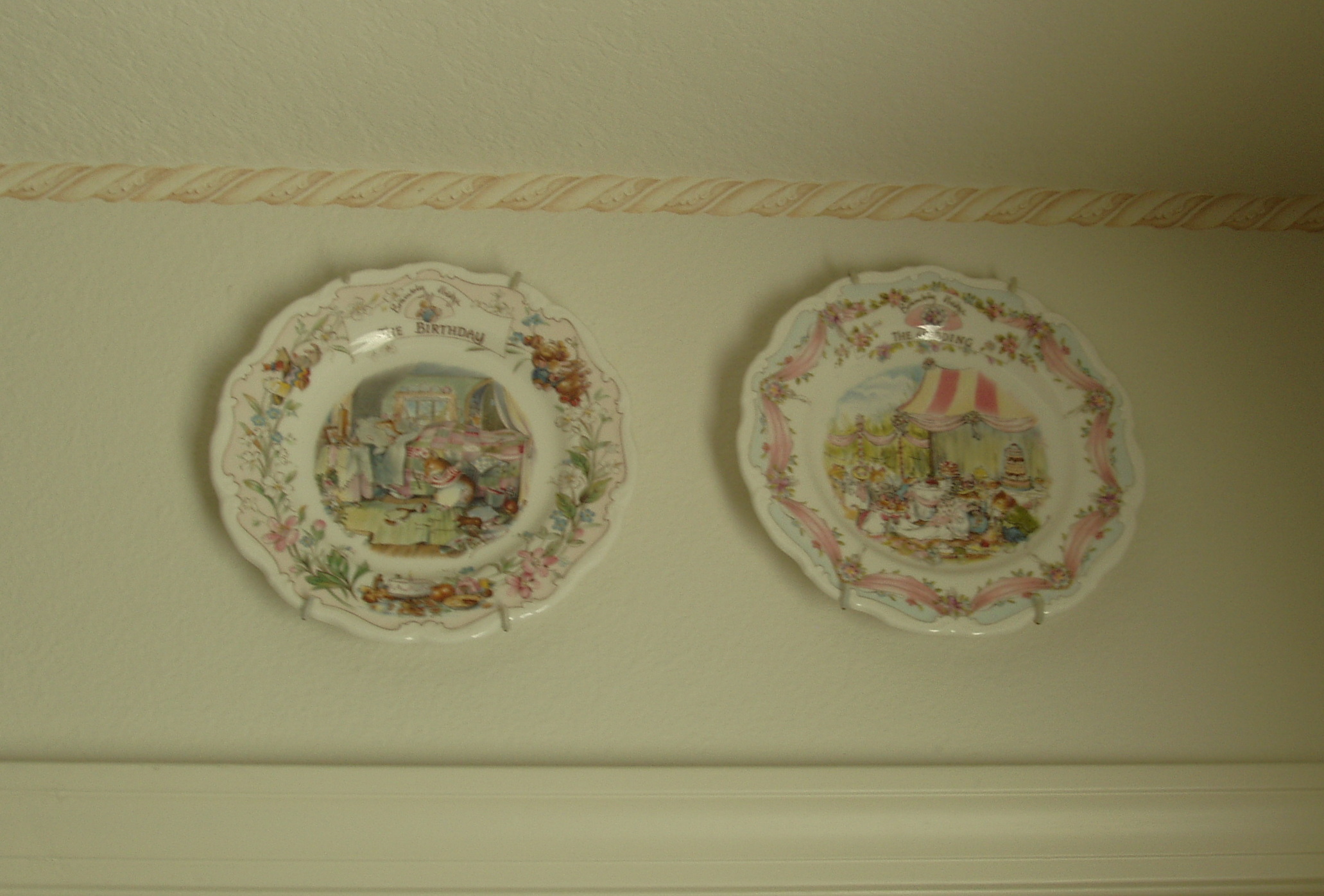
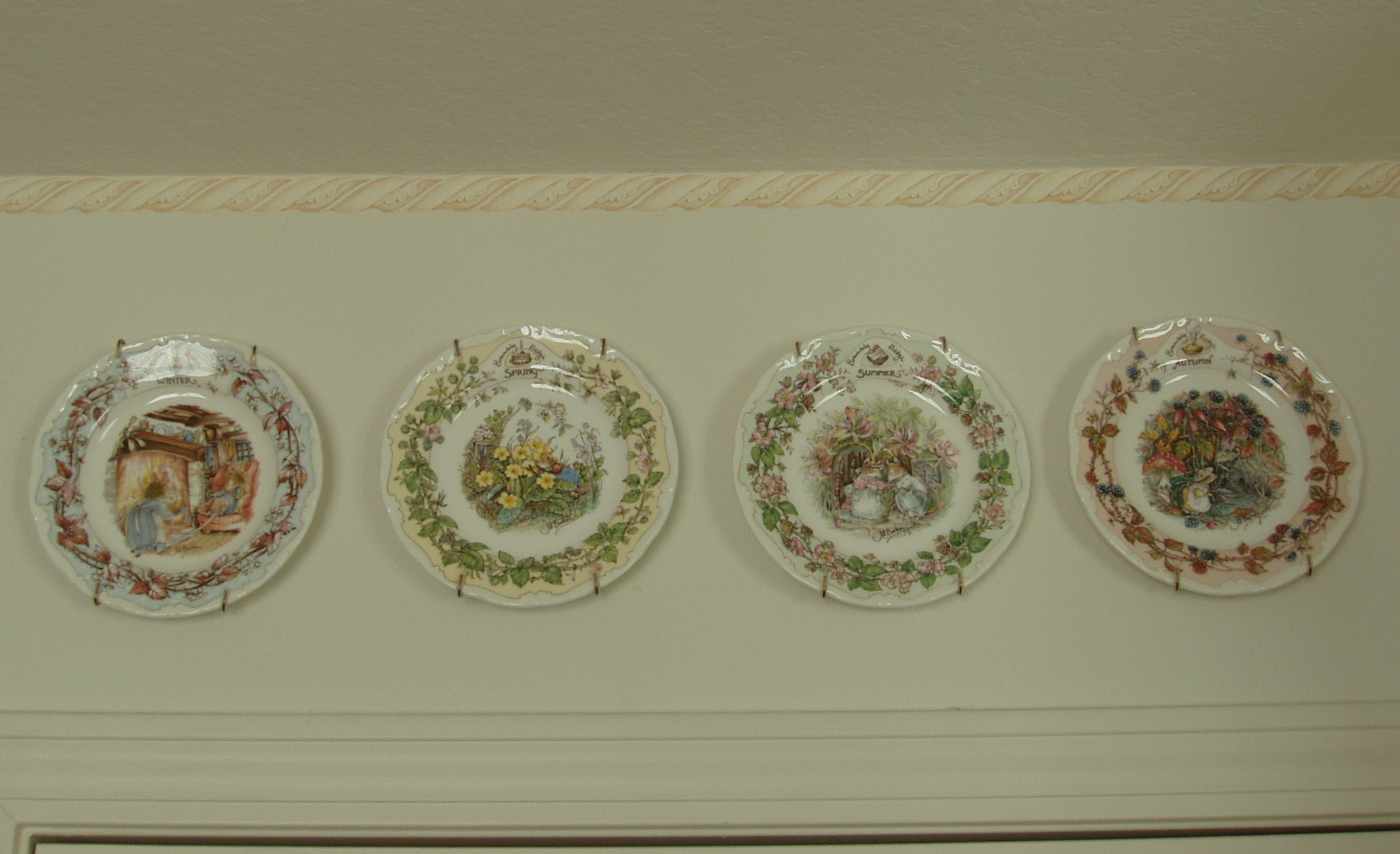
Also on the wall around the room were several Brambly Hedge plates, the decorative plates featured scenes from the charming children stories written by Jill Barklem.  I enjoy decorating our home with special plates and I have several different series – for more information about Decorating With Plates, please click on the link.

OLYMPUS DIGITAL CAMERA

OLYMPUS DIGITAL CAMERA

 Pre-teen / teenager bedroom –

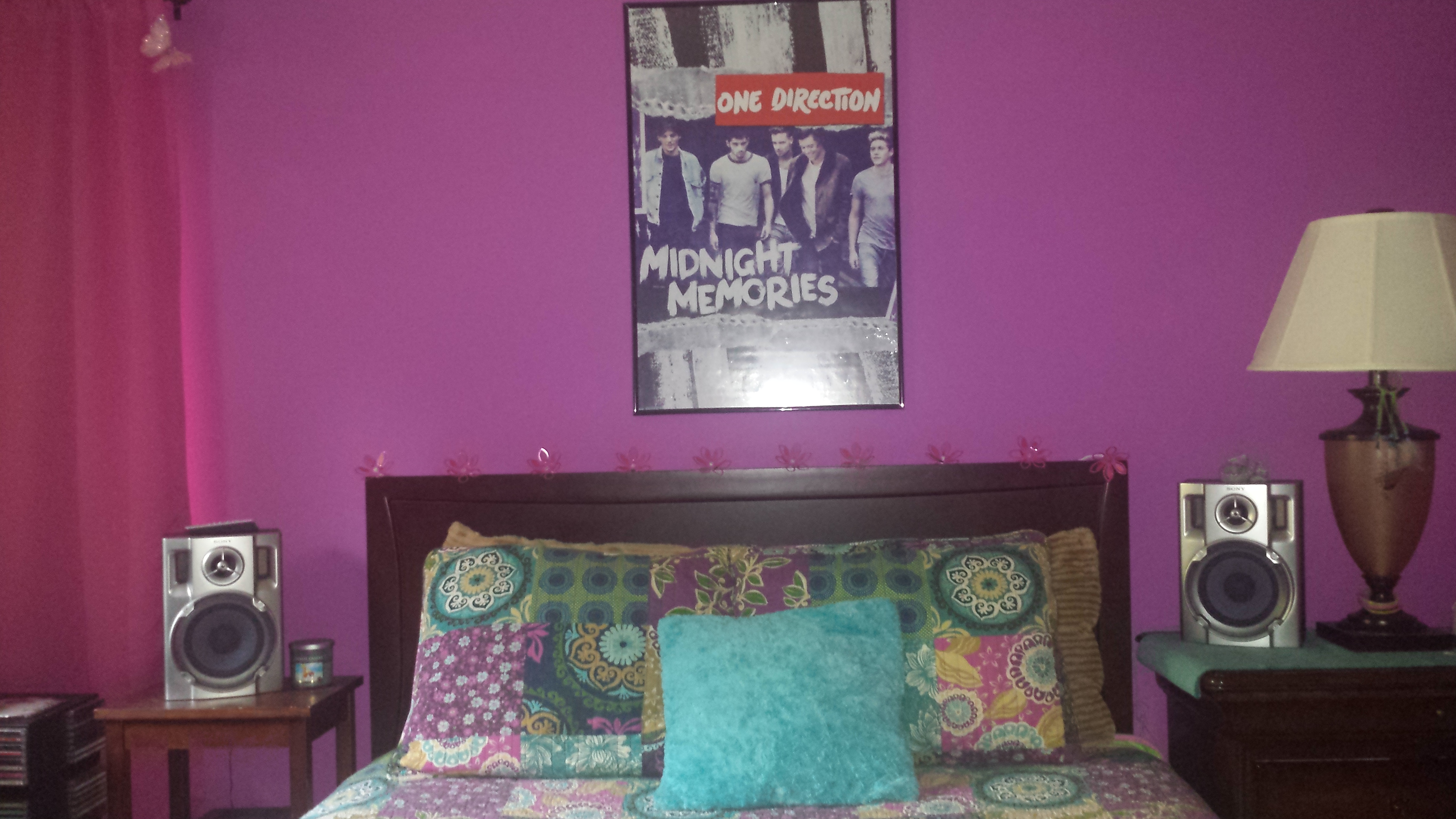
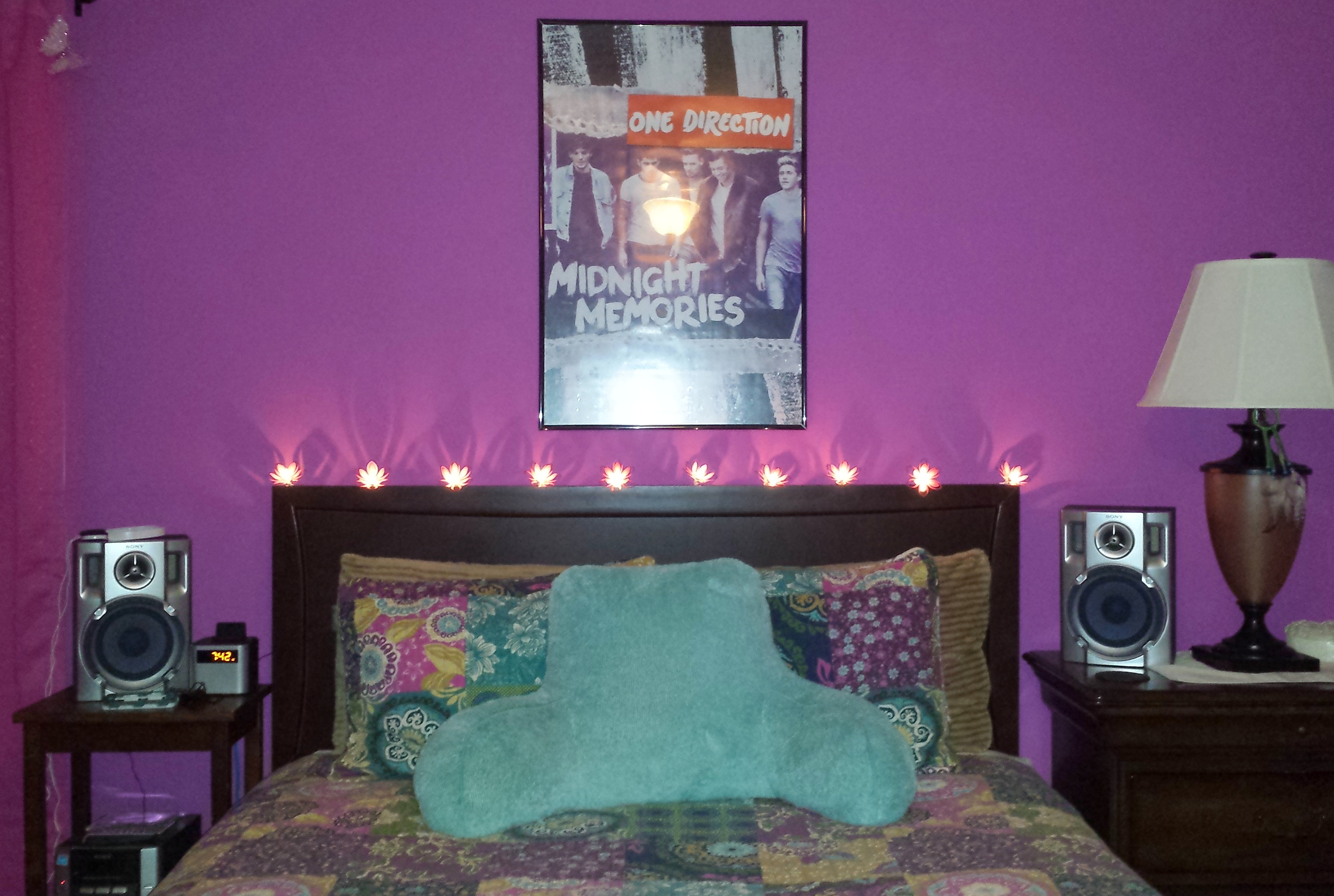
After our family moved to the Midwest, our daughter was a pre-teen.  Our daughter now had very definite opinions about how she wanted her bedroom decorated.  We bought her a beautiful queen-sized sleigh bed and a matching dresser and side table for her new room.  She used the bedroom set for a few years and when she became a teenager she wanted something different so everything was moved to our guest bedroom.  Then, we found a simpler headboard for her bed; we also bought a desk and chair for her to do homework and two tall narrow bookshelves and a CD tower to hold all her things.  The furniture in her bedroom in California had been light wood or painted white and now the furniture was dark wood or painted black.  To complete the bedroom, I bought a new bedspread which was very colorful and reminiscent of a Vera Bradley fabric.   To complete the bed, we found pink flower lights and strung them on top of the headboard and at night they provide a great glow to the room!

2014 Cassie bedroom 1a2014 Cassie bedroom 1

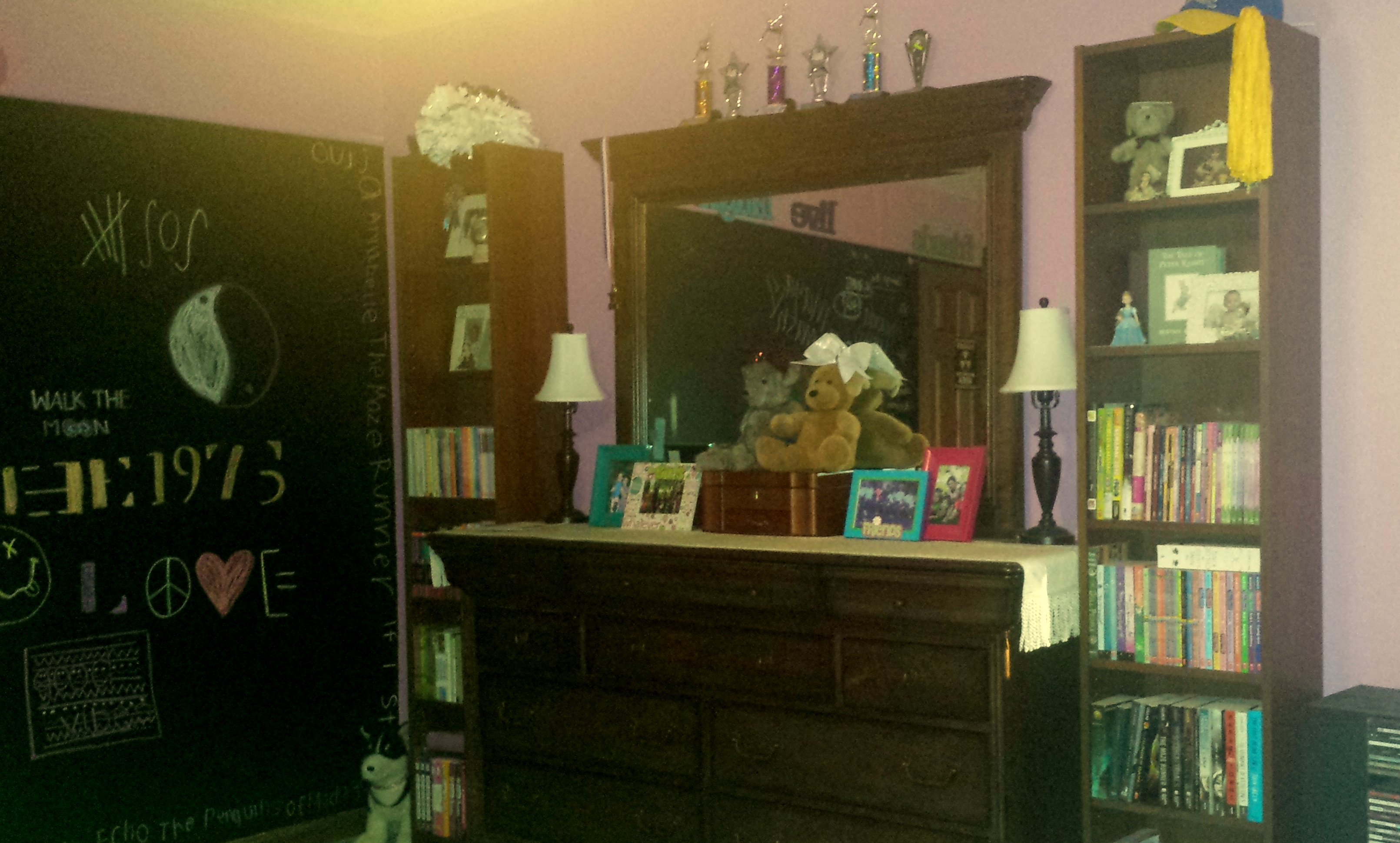
One of the first things she changed in her room after becoming a teenager was that we painted her room a wonderful shade of dark pink, it as a bold choice but she really like it!  We painted the fourth wall with blackboard paint; another interesting choice because she wanted to write on the walls with chalk and it has been great fun for her and her friends.

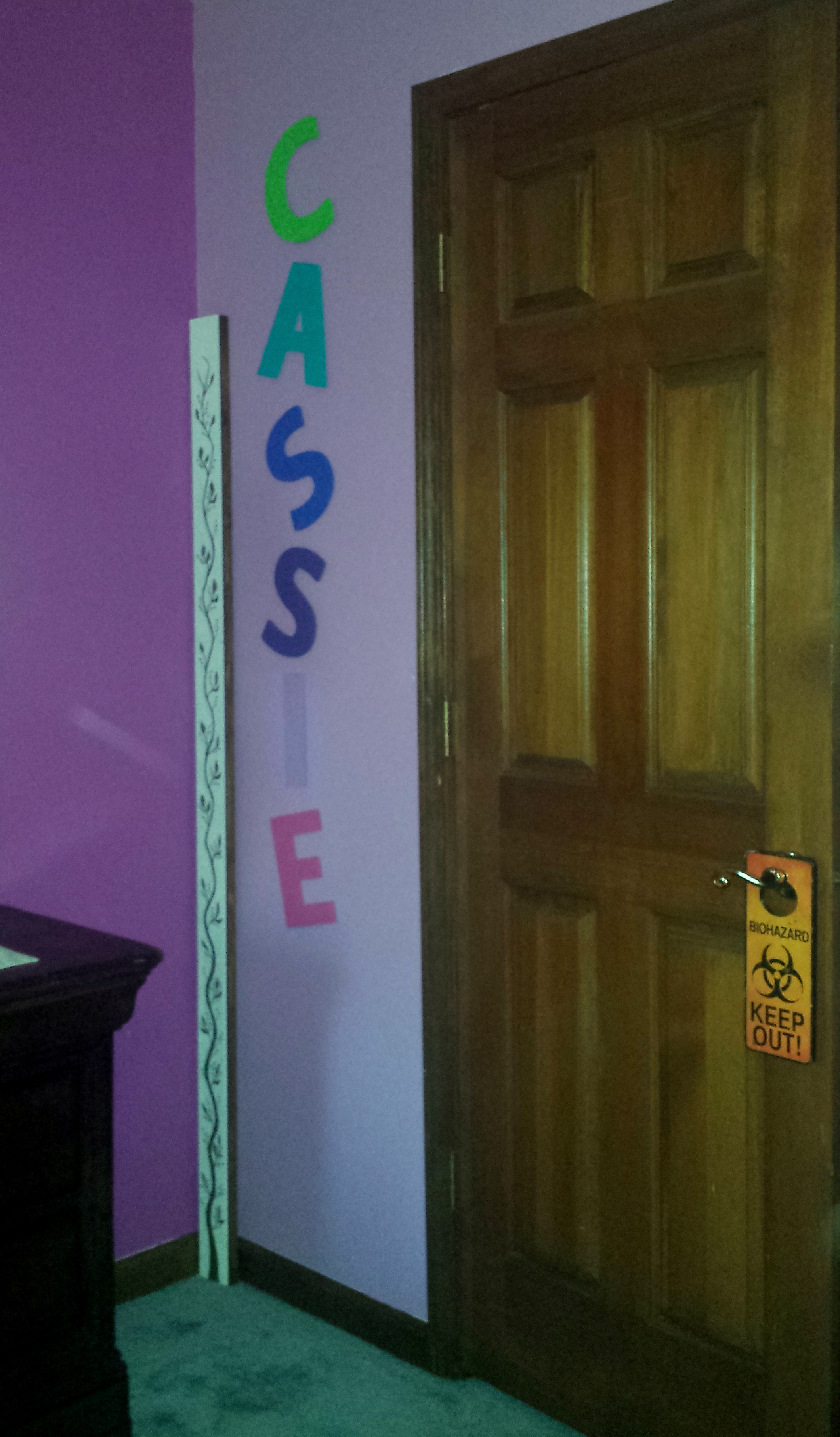
Next to the bed, in the corner of the room is a painted board that I made to mark our daughter’s height throughout the years.  Most often parents will mark their children’s growth with marks on a door frame or wall, this is what a relative did and when they moved it broke their heart to leave those behind.  Before our daughter was born I knew at some point in our lives we would be moving and I wanted to preserve those memories, so I made a height marker for her room.  It was a simple wooden board, painted white with winding ivy and flower buds for decoration.  I am so glad we have the height marker and it is something our daughter will have.  To add more interest in the corner I painted large letters to spell our her name.

2014 Cassie bedroom 3

Recently, I created several special framed artworks to hang in her room.  Our daughter has participated in several plays and I framed the t-shirts from each of the plays as a reminder of the fun see had during these school productions.  I addition to those ones, I framed t-shirts commemorating graduation from elementary school, middle school cheer team and a t-shirt from her high school.  Also, with our daughter being on a competition cheer, she has collected many bows.  To have a place for her to hang them I created a special board with a framed logo from an old jacket.  (For more information on these projects, please look for future craft posts)

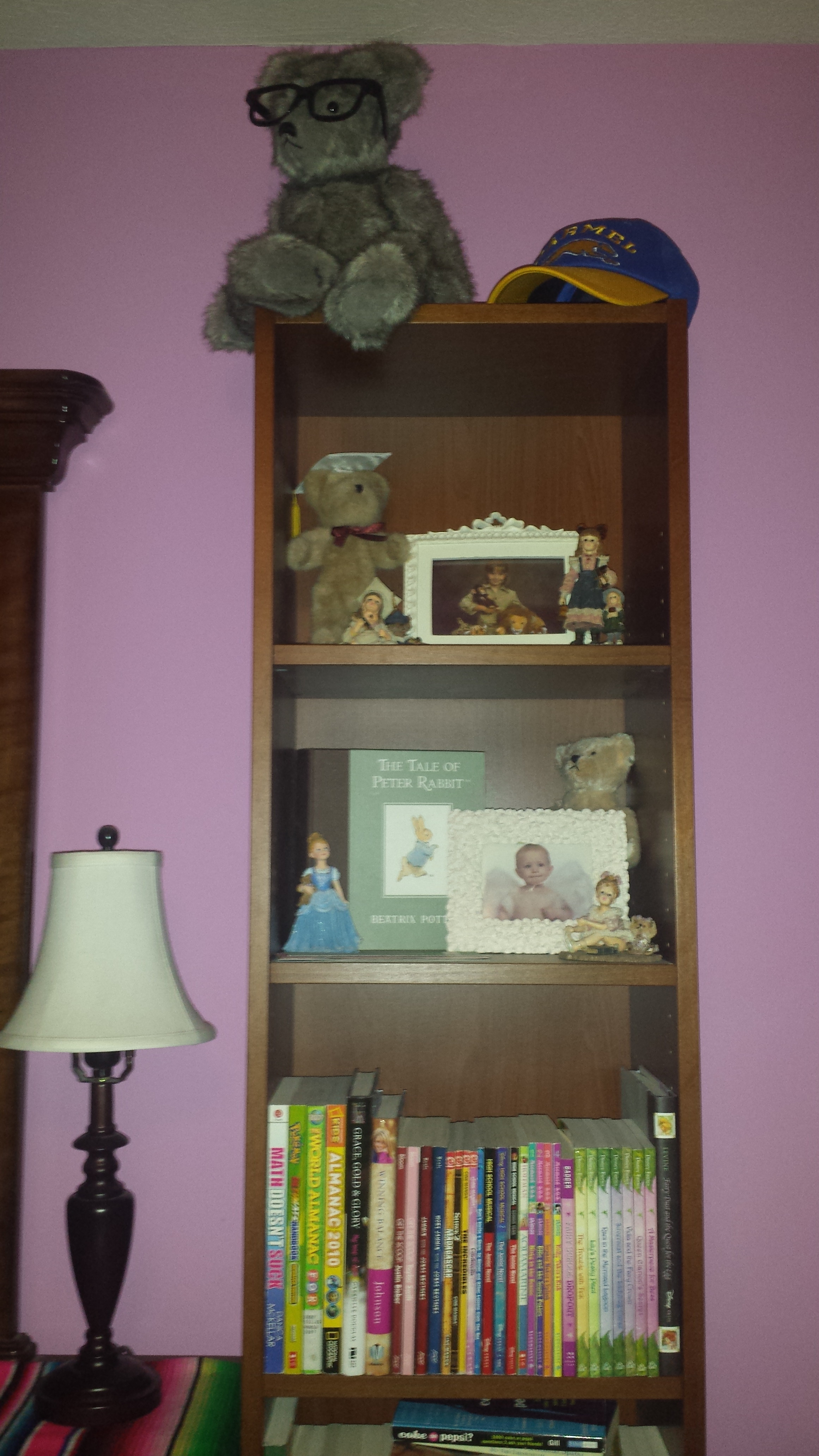
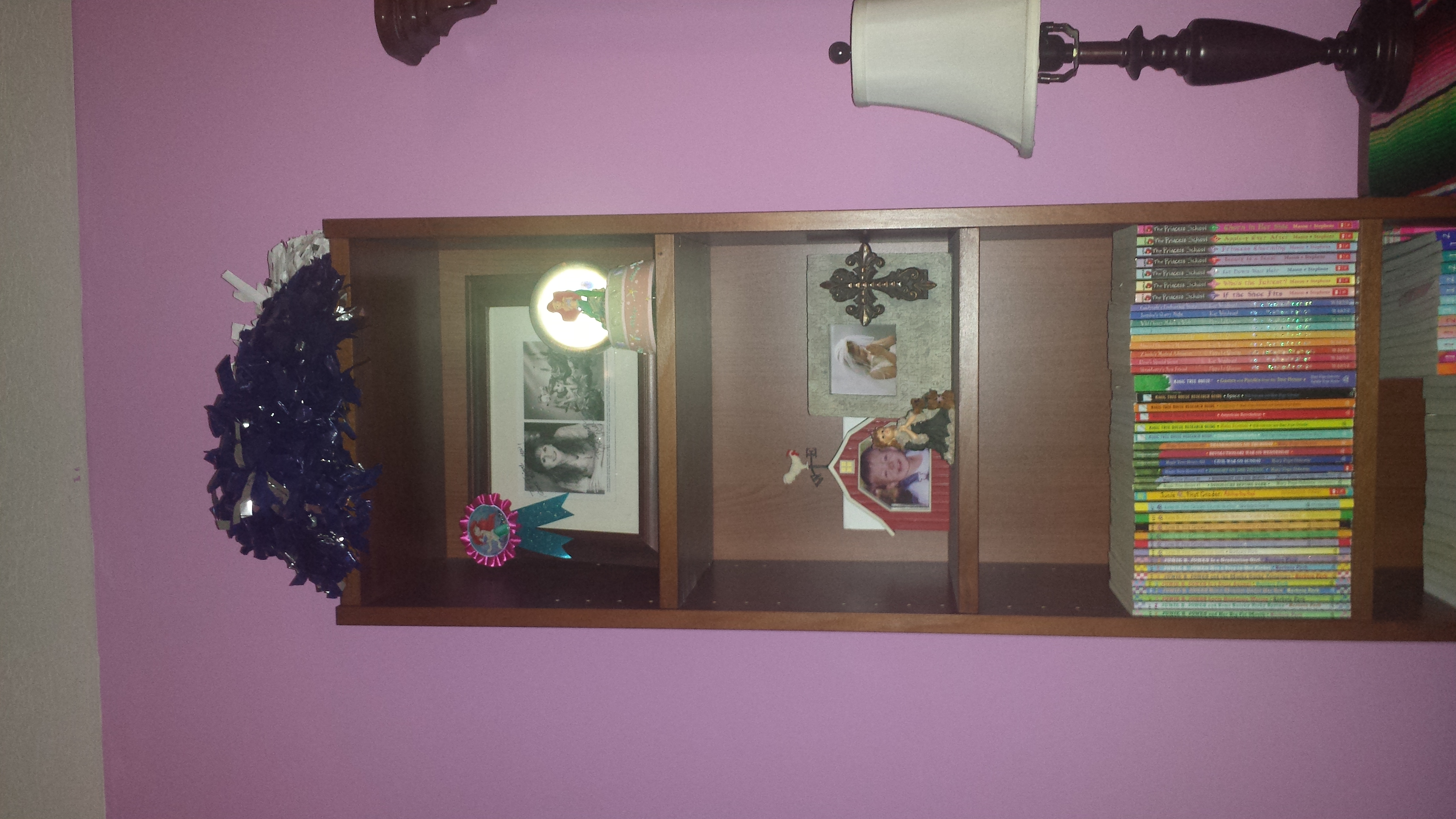
On either side of the dresser we positioned the two tall bookshelves, some of the items such as framed photos had remained the same but other items were more grown-up.  By the time she was a teenager the items in her room changed from stuffed animals, toys and games to numerous books and CDs, a keyboard and an electric guitar.  Scattered around the room were trophies and cheerleading items and more colorful frames with photos of her and her friends.  After a recent trip to Cancun this summer we came back with a colorful Mexican blanket and we added it to the dresser.

2014 Cassie bedroom 2

2014 Cassie bedroom 4    2014 Cassie bedroom 3

I like both her child and teenage bedrooms, they are so different.  But what I love about our daughter’s room now is that her bedroom shows her personality, her hobbies and the things that are important to her.


Craft – Fairy Under Glass

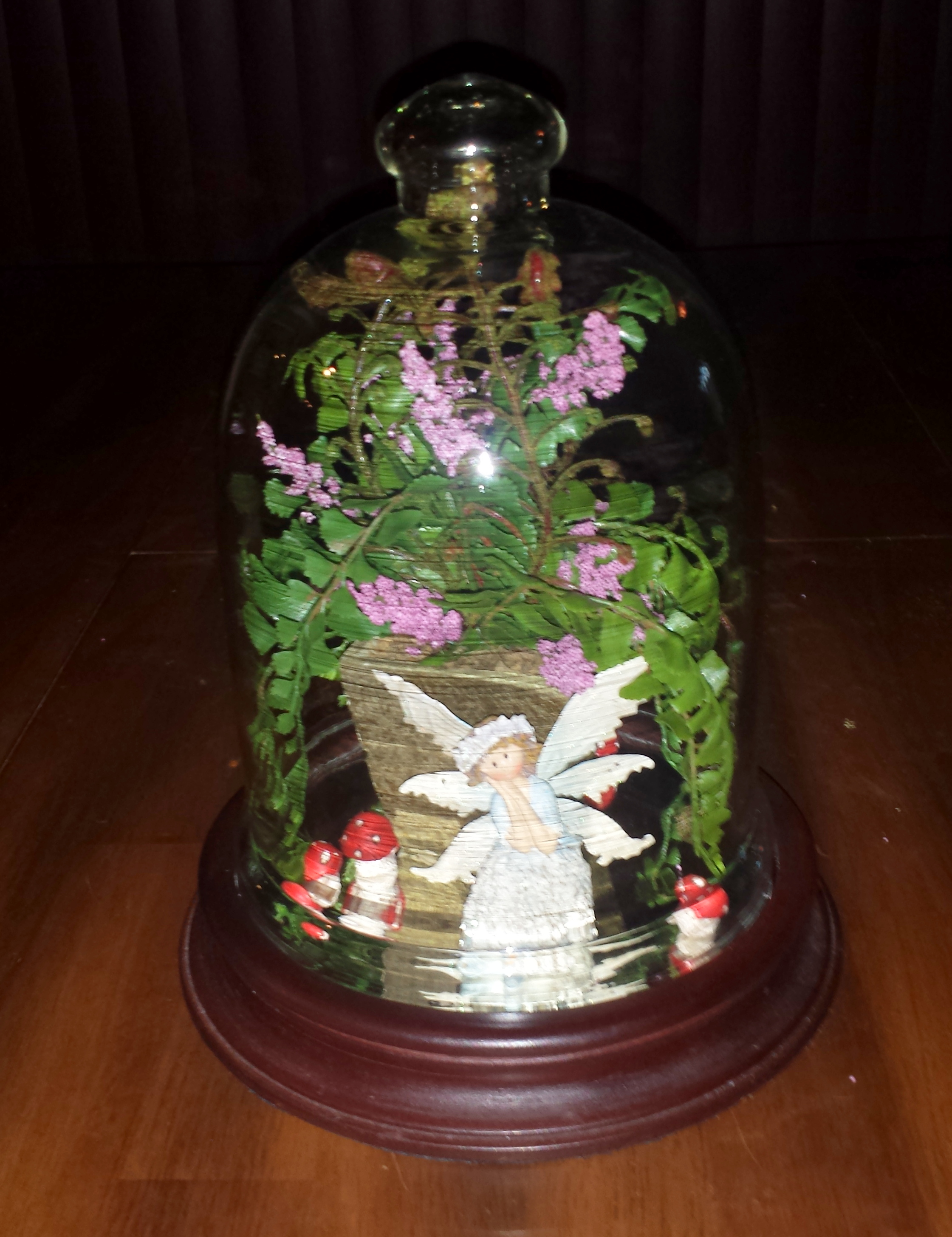
Fariy Under Glass complete

A couple of years ago I did a Craft post, Glass Dome Arrangement and at the time the popular trend in home accessories was a terrarium containers.  The arrangement was set on a cabinet in our home and I really liked it.  Another Craft Post that I did several years ago was a Butterfly in a Jar and that arrangement sit on the desk in my home office during the spring and summer seasons.

For this craft project, it was the end of summer I thought it would be a fun idea to “trap” a fairy under glass to keep throughout the fall and winter months until I could let her “escape” in the springtime!!

The Fairy Under Glass craft project was very easy and took less than an hour to create, I re-purposed most of the items used in the previous arrangements so the cost was keep to a minimum.  But, if you are going to create this craft project from scratch the items required are very inexpensive.

Listed below are the supplies and instructions for the Fairy Under Glass craft project.

Fariy Under Glass suppliesFairy Under Glass – supplies

  • Glass container (the dimensions will be determined by the floral and fairy size)
  • Fairy figurine
  • Floral items (I used two different types of ferns and flowers to add color)
  • Artificial Mushrooms
  • Moss (optional)

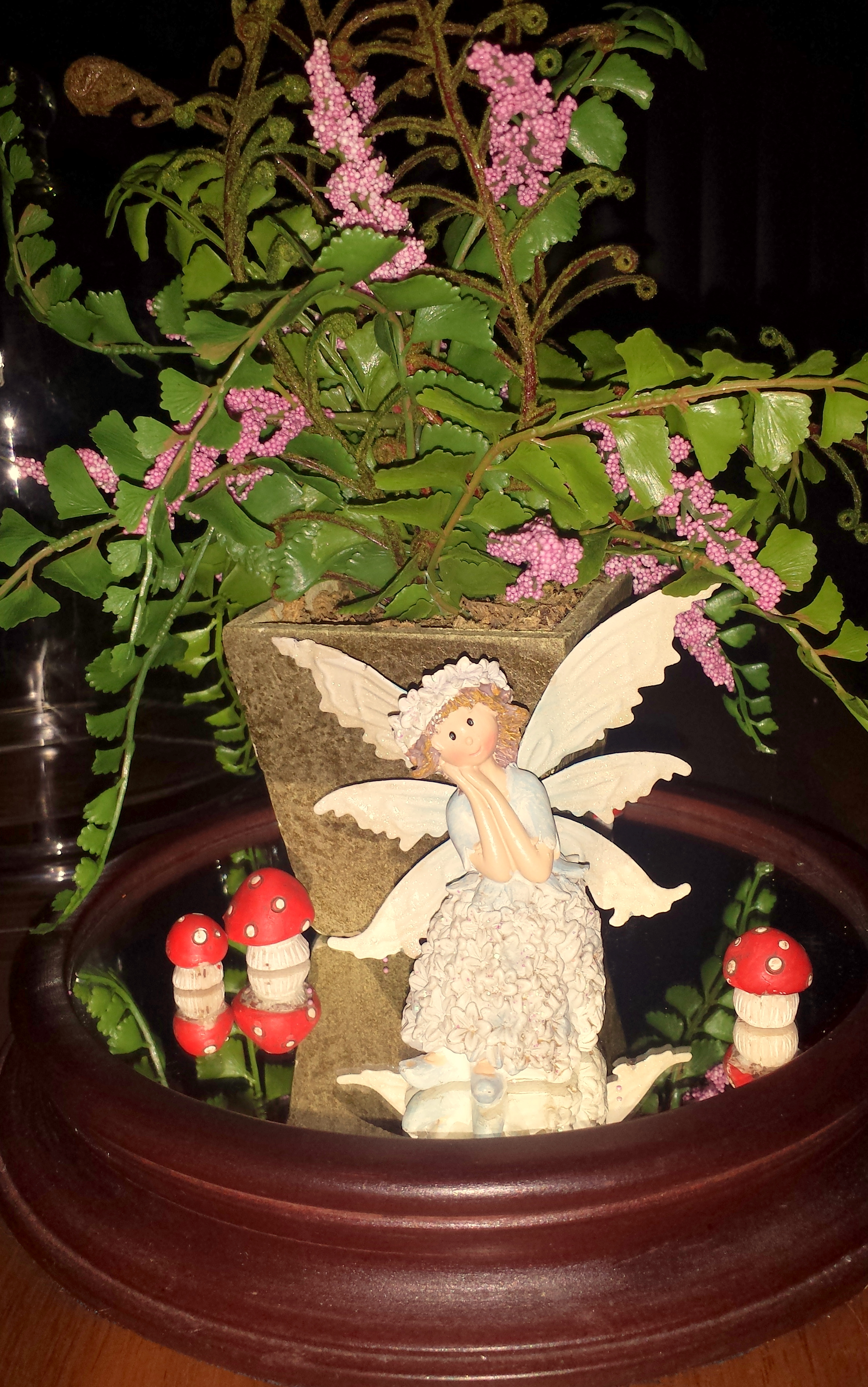
Fariy Under Glass complete - dome off 2a

Fairy Under Glass – instructions

  1. Prepare the glass container for the craft project, clean or dust if necessary
  2. Arrange ferns and flowers (for this project I re-purposed the ferns from a previous arrangement and added flowers for a little bit of color)
  3. Place the fairy figurine at the front of the arrangement (I add a little bit of sparkle paint to the fairy’s wings to allow them to glimmer)
  4. Scatter a few mushrooms around the fairy
  5. (Optional) Add a little bit of moss to the arrangement, place some around the fairy and the mushrooms

Fariy Under Glass complete - dome off 1


Travel – Windsor Castle (Part Two)

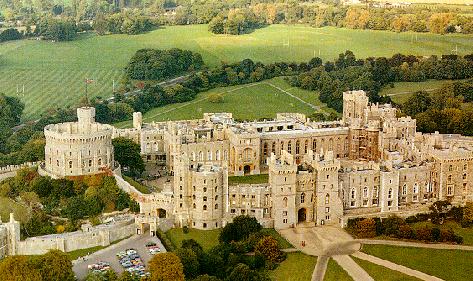
The Windsor Castle-legendary place tourism destinationsWindsor Castle has been an official Royal residence for 39 British monarchs including the present Queen Elizabeth II.  In Windsor Castle – Part One, I discussed the history of Windsor Castle dating back over 1000 years to when it was built shortly after the Norman Conquest.  In Part Two, I will discuss the architecture of the main buildings and give a short tour of some of the rooms inside Windsor Castle as well as a brief description of St. George’s Chapel.

In general, Queen Elizabeth frequently spends weekends at Windsor Castle when she is not required to be in London for formal appearances or special occasions.  The castle is located about 22 miles from Buckingham Palace, the monarch’s official London residence.  In the spring, every year during the Easter season (April – March), the Queen will remain at the castle for several weeks.  In June the Order of the Garter ceremony takes place at St. George’s Chapel and prior to the service a luncheon is held in the Waterloo Chamber in Windsor Castle.  The Royal Ascot horse races are also held in June and of course the Queen, Prince Philip and the other members of the Royal family attend the festivities.  At various times throughout the year Windsor Castle is also used to host State Visits for foreign heads of state and diplomatic dignitaries.

A tour of Windsor Castle

Windsor Caste is a British Royal residence located on 13 acres in Berkshire about 22 miles from Buckingham Palace, London.  The castle consists of three distinct sections known as the Middle Ward, the Upper Ward and the Lower Ward. The ancient fortifications were built as a line of defensive by William the Conqueror, a Royal palace was first built and then expanded over several centuries with an adjacent small town with shops and a nearby railroad station.

The Middle Ward

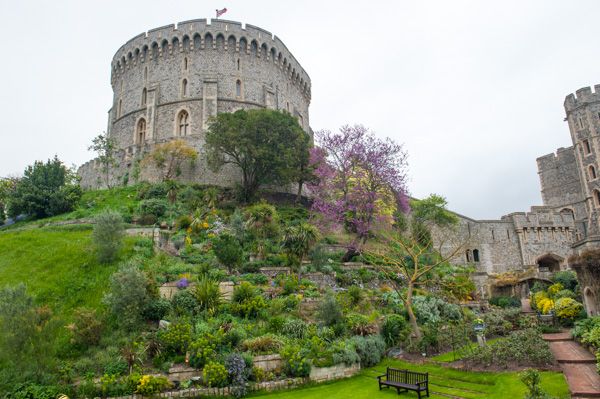
The Middle Ward is considered the heart of Windsor Castle with a stone tower, known as the keep, which is set upon a large mound.  The mound is approximately 50 feet high and the keep, fittingly called the Round Tower, is 30 feet across and was originally built in 1170 by King Henry II.  Throughout the years it has been rebuilt several times and is currently being used to store the Royal Archives.  To the east of the Round Tower is the Norman Gatehouse which was built in the 14th century and features a vaulted ceiling decorated with medieval carvings and it serves as an impressive entrance into the Upper Ward of Windsor Castle.
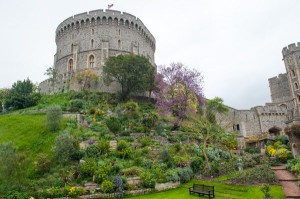
Windsor Castle - Round Tower

The Upper Ward

The Upper Ward is surrounded by a wall made of Bagshot Heath stone which encloses several buildings forming a central quadrangle.  In this area of Windsor Castle the State Apartments are located on the north side with the private rooms of the Royal Family to the south side.  Adjacent to the Upper Ward is the North Terrace which overlooks the River Thames and was built in the 17th century by King Henry VIII.

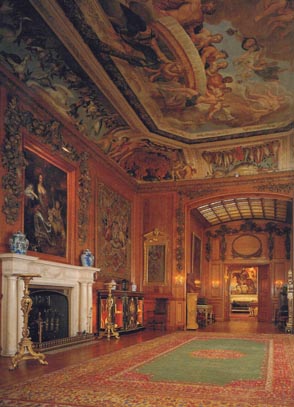
Visitor tours enter the State Apartments through the doors off the North Terrace.  During the reign of King Charles II the State Apartments were renovated to rival the rooms of Versailles in France, the ceilings were originally painted by Antonio Verrio and decorative carvings by Grinling Gibbons.  Today, the State Apartments are furnished with artwork from the Royal Collections, including paintings by Rembrandt and Rubens.

The Grand Staircase features a timbered lantern ceiling which provides plenty of light and a stone base comprising of four stone arches.  Located on the landing of the Grand Staircase is a large marble statue of King George VI by Francis Chantrey and several artfully arranged military weapons hanging on the walls and suits of armor displayed.  After descending the Grand Staircase, visitors enter the Grand Vestibule with a beautiful plaster fan vaulted ceiling accented with foliage and angels created by Francis Bernasconi.  To the left is a large marble statue of Queen Victoria depicted with her collie named Sharp, the statue is by J.E. Boehm.  Also displayed in the Grand Vestibule are more military arms and positioned against the walls are several Gothic-style cabinets displaying another military collection including the lead bullet that killed Admiral Lord Horatio Nelson in the Battle of Trafalgar which established the naval supremacy of Britain during the eighteenth century.
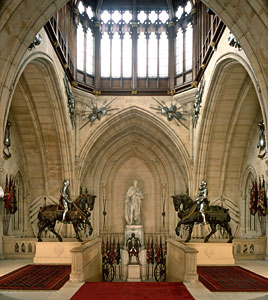
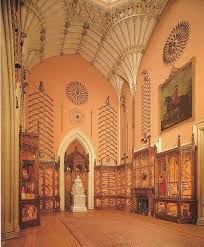
Windsor Castle - Grand Staircase    Windsor Castle - Grand Vestibule

The next set of State Apartments rooms were designed by Jeffry Wyatville during the reign of King Charles II.  This area of Windsor Castle was originally used for State officials and visiting dignitaries; later guest accommodations were moved to the south side of the Castle.   Today, visitors on the Windsor Castle tour will pass through the Ante Throne Room and into the King’s Drawing Room.  During the 19th century the King’s Drawing Room was known as the Rubens Room because Prince Albert decorated this room with several paintings by the renowned Flemish Baroque painter Peter Paul Rubens which are part of the permanent Royal Collection.  The room also features an elaborate plaster ceiling decorated with the coat of arms of King George IV and the Garter Star.  The carved cornice and the paneled doors were created by Grinling Gibbons and the Siena marble chimneypiece was designed by Wyatville.  (Royal Note: The bay windows in the King’s Drawing Room offer visitors a great view of Eton located across the River Thames where just a few years ago both Prince William and Prince Harry attended the elite boarding school)
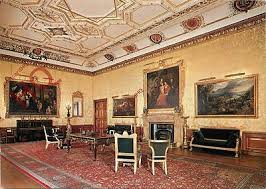
Windsor Castle - King's Drawing Room

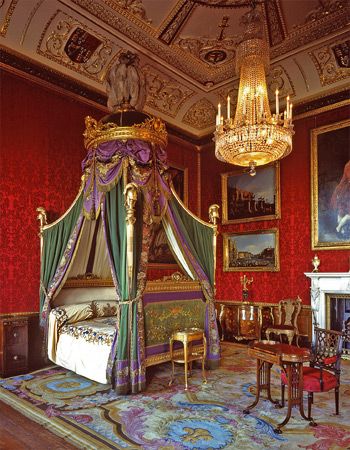
Completing the King’s suite of rooms are the King’s Bed Chamber, the King’s Dressing Room, the King’s Closet and the King’s Dining Room.  The first of two rooms of note is the King’s Bed Chamber which features walls covered in red damask, a plaster ceiling decorated with the Stuart coat of arms, a carved cornice by Gibbons and a white marble chimneypiece by William Chambers that was originally used in Buckingham House.  The elaborate bed by French woodworker Georges Jacob is draped with green and purple fabric similar to those used when French Emperor Napoleon III came for a State visit in 1855; the intertwined initials of both Napoleon and his Empress Eugenie are embroidered on a fabric panel at the foot of the bed.
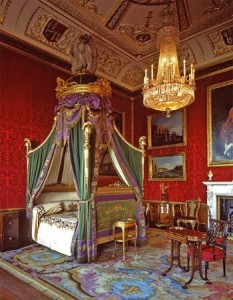
Windsor Castle - King's Bedchamber

The second room of note is the King’s Dining Room originally used by King Charles II when he dined in front of the pubic on specific days of the week.  But unlike the other rooms of the State Apartments that had ceilings painted by Verrio, in Windsor Castle there are only three that have survived, and this one appropriately depicts a banquet of the gods featuring magnificent fruit, fowl and fish paintings.  Once again the intricate wood carvings in the room are by Gibbons and two large Brussel tapestries showing the coat of arms of King William III and Queen Mary II hanging on the walls were designed by Daniel Marot.
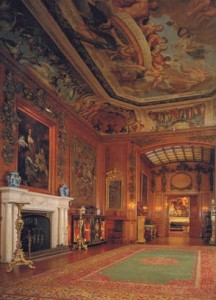
Windsor Castle - King's Dining Room

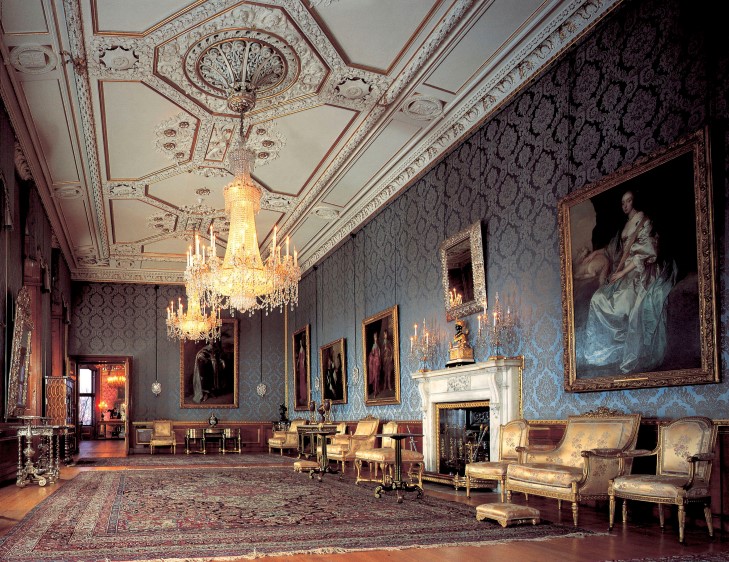
The Queen’s suite of rooms in the State Apartments included the Queen’s Audience Chamber, the Queen’s Presence Chamber, the Queen’s Guard Chamber and finally the Queen’s Ballroom.  The Queen’s Ballroom is where, during a State Visit to Windsor Castle, visiting foreign heads of State are received by the British monarch and the Diplomatic Corps.  This large room was extensively renovated by Wyatville for King William IV and the three beautiful glass chandeliers were originally commissioned by King George III.  As mentioned previously, during the reign of Queen Victoria her husband, Prince Albert, grouped many of the paintings in the Royal Collection by the prominent artist to decorate several of the rooms in Windsor Castle and in this case in the Queen’s Ballroom has on display several paintings by the Flemish Baroque artist Anthony Van Dyck including “Charles I in Robes of State” (1636).
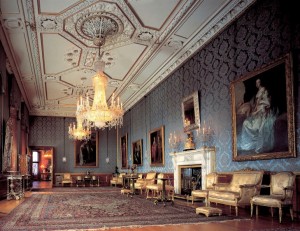
Photo: Mark Fiennes

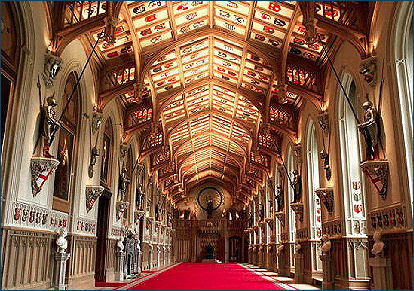
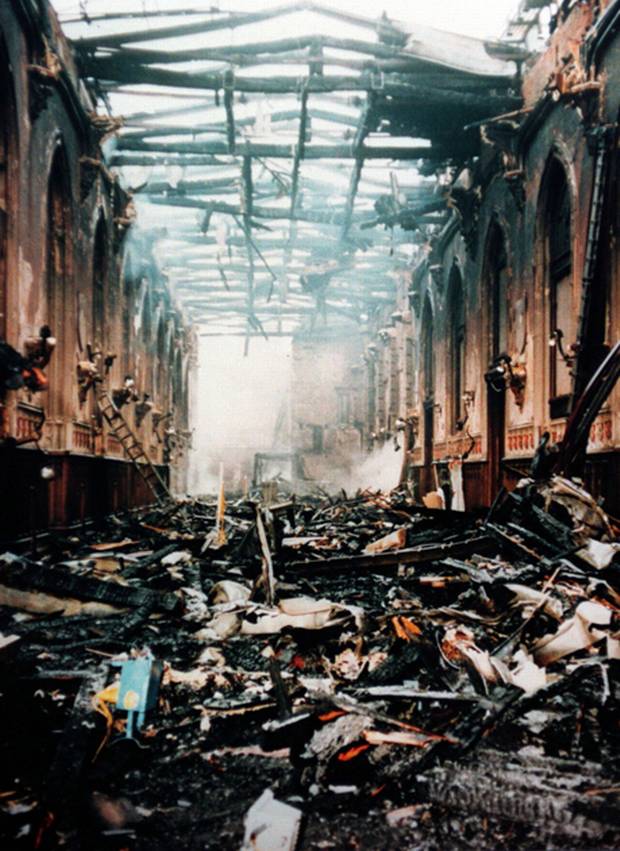
Another room visitors will see on the tour of Windsor Castle is the magnificent 180 foot long St. George’s Hall.  In the 1820s when Wyatville was renovating this part of Windsor Castle he choose a Gothic-style of decoration with the walls hung with military weapons and suits of armor on display.  The original plaster ceiling had been created to resemble wooden beams and decorated with the coat of arms of the Knights of the Order of the Garter.  Then, several centuries later, in 1992 the Windsor Castle fire completely destroyed the ceiling and the east wall of St. George’s Hall.  (More on the 1992 Windsor Castle Fire later in this post)  A new oak hammerbeam roof was constructed and the shields of the Knights of the Garter were painstakingly recreated and repositioned on the new ceiling.  (Royal Note: Another important addition which was part of the restoration is an equestrian figure positioned at the east end St. George’s Hall known as the King’s Champion.  In centuries past the King’s Champion would ride into the Coronation Banquet in Westminster Hall and throw down his gauntlet three times in a challenge to anyone that would deny the new monarch, the last time this was done was at the Coronation of King George IV in 1821.
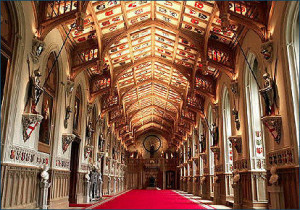
Windsor Castle - St. George's Hall

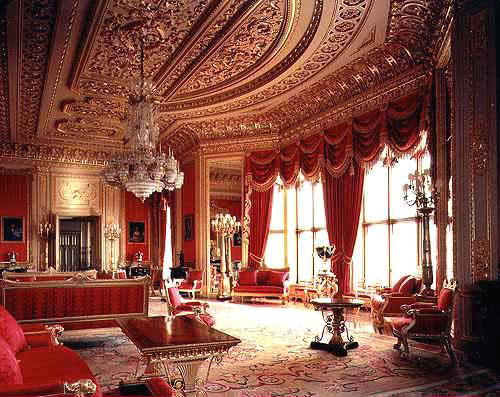
The Windsor Castle tour continues into the Semi-State Apartments which were originally the private apartments created for King George IV by the architect Wyatville The rooms of the Semi-State Apartments include the Lantern Lobby, the Green Drawing Room, the Crimson Drawing Room, the State Dining Room, the Grand Reception Room, the Garter Throne Room and the Waterloo Chamber.  Unfortunately these rooms were severely damaged by the fire of 1992, later to be completely restored, and are currently used by the present Queen for official entertaining when in residence at Windsor Castle.  Below are highlighted some of the rooms of the Semi-State Apartments.

One room of note is the Lantern Lobby which is located on the former site of Queen Victoria’s Private Chapel and the unique octagonal-shaped room is at the northeast corner of the Castle situated between St. George’s Hall and the Royal Family Apartments.  It is here where the devastating 1992 fire of Windsor Castle started and a stone plaque commemorates the event and notes the date of the completion of the five year restoration.  The former chapel was completely gutted and eight oak columns support an intricate Gothic-style vaulted ceiling with a central lantern.  The inlaid floor is set in English marble and features the Garter Star in the center of the room.
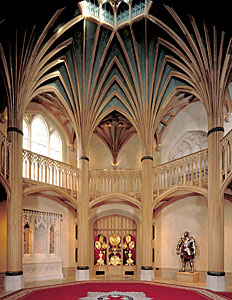
Windsor Castle - Lantern Lobby adjacent to the Private Chapel

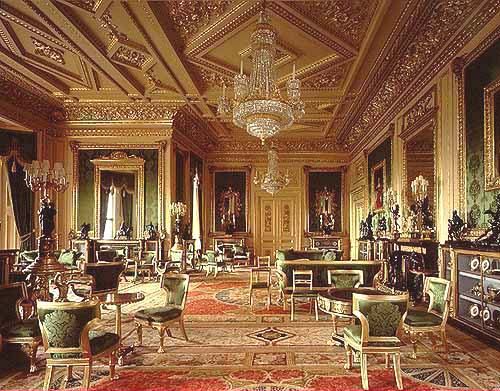
Another room in the Semi-State Apartments, which can be seen from the Crimson Drawing Room, is the Green Drawing Room.  This room survived the 1992 fire but was heavily damaged by the water used to extinguish the blaze.  The beautiful Axminster carpet was originally displayed at the Great Exhibition of 1851 as a fine example of English manufacturing before it was installed in the Green Drawing Room during the reign of Queen Victoria, the carpet survived the fire but it is in such a fragile condition that the room is closed to visitors on the Windsor Castle tour.  (Royal Note: The Green Drawing Room is the setting of the painting “The Family of Queen Victoria” which was painted in 1887 by Laurtis Regner Tuxen to commemorate the occasion of the Queen’s Jubilee and features Queen Victoria and her large extended family)
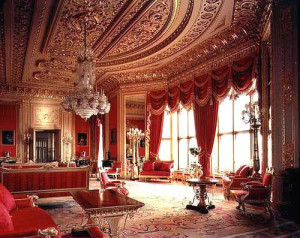
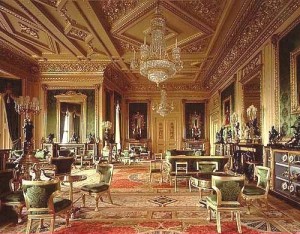
Windsor Castle - Crimson Drawing Room    Windsor Castle - Green Drawing Room

The Garter Throne Room is one of the most historic rooms in Windsor Castle and this is where for centuries the new Knights and Ladies of the Order of the Garter are invested by the British monarch before their installation ceremony in St. George’s Chapel.  The previous painted ceiling by Verrio was replaced by a moulded plaster ceiling designed by Wyatville which appropriately features the insignia of the Order of the Garter.  At one end of the room is a Giltwood canopy which dates back to the late 18th century which is hung with beautiful velvet hangings.  On a raised platform sits a Giltwood throne originally made for the 1953 Coronation of Queen Elizabeth II and hung in the Garter Throne Room is a State portrait by James Gunn which depicts the Queen dressed in her Coronation robes and dress.
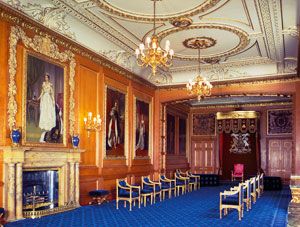
Windsor Castle - Garter Throne Room 1

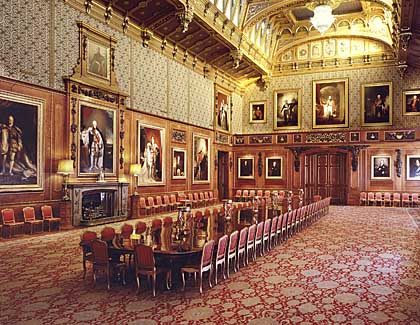
The Waterloo Chamber is one of the largest rooms in Windsor Castle and it is dedicated to the 1815 military defeat of Napoleon Bonaparte at Waterloo by British forces which were led by the Duke of Wellington.  Wyattville had the previous Horn Court of King Edward III enclosed with a ceiling designed to resemble the timbers of a ship.  The paneled walls were created by Gringling Gibbons.  The Indian carpet, said to be the largest seamless carpet in existence, was created to commemorate Queen Victoria’s Golden Jubilee and luckily the immense carpet was able to be saved during the 1992 fire when it took 50 soldiers to roll-up and remove it from Windsor Castle.
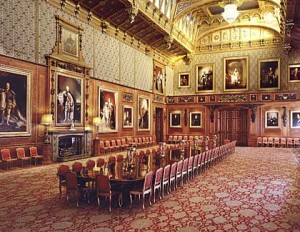
Windsor Castle - Waterloo Chamber

King George IV commissioned Thomas Lawrence to paint portraits of the monarchs, statesman and military commanders who contributed to the victory over Napoleon at Waterloo.  The large portrait of the 1st Duke of Wellington hangs on the east wall of the Waterloo Chamber and additional portraits hung around the room included Tsar Alexander I of Russia, King William III of Prussia and Emperor Francis I of Austria and Pope Pius VII as well as Emperor Napoleon II.

Set in the center of the Waterloo Chamber, running almost the entire length of the room, is the massive mahogany dining table created by Thomas Dowbiggin in 1846.  Every year in June, Queen Elizabeth holds the Garter luncheon for the Knights and Ladies of the Order of the Garter.  The magnificent tables is beautifully set with wonderful gilt silver, china place settings from the historic Royal Collection and elaborate floral decorations for the fifty to sixty invited guests.

The Lower Ward

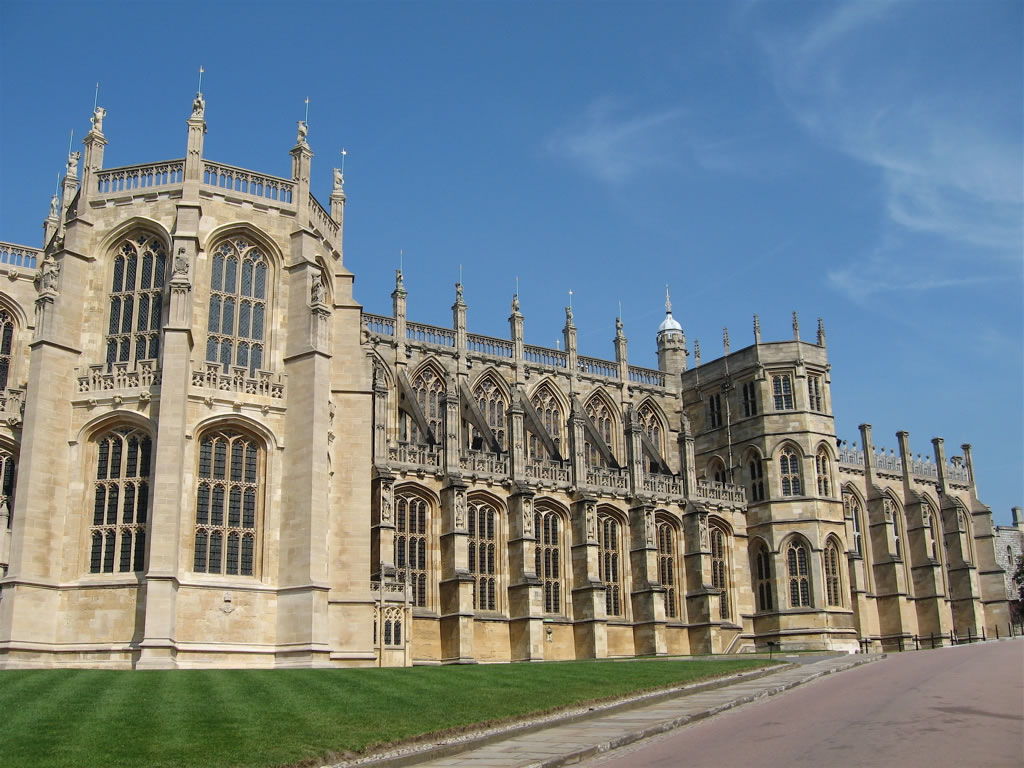
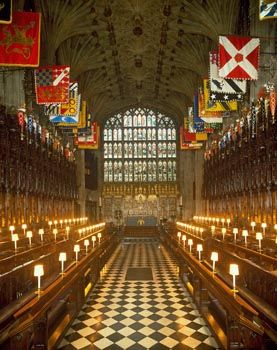
The Lower Ward of Windsor Castle is located just west of the Round Tower through the Norman and is divided into two areas, the College of St. George comprising of residences for the Dean and Canons of Windsor located in the northern section and the historic St. George’s Chapel located in the southern section of the Lower Ward.  The Gothic-style St. George’s Chapel completed in the 16th century is considered the spiritual home of the Order of the Knights of the Garter and is a Royal Peculiar meaning that it owes allegiance directly to the Sovereign.  The interior wooden choir stalls have brass plates bearing the cost of arms of the individual Knights of the Garter from the past six centuries.  Within St. George’s Chapel are the tombs of ten Sovereigns; including Henry VIII and two of his six wives, Catherine of Aragon and Jane Seymour, and King Charles I.  In 2002, the funeral of Princess Margaret, the sister of Queen Elizabeth, took place at the Chapel and a few months later that same year Queen Elizabeth the Queen Mother was buried beside her husband, King George VI.  On a more joyful occasion, in 1999 Prince Edward and Sophie Rhys-Jones were married in St. George’s Chapel and in 2005 the dedication and prayer service of Prince Charles, the Prince of Wales and Camilla Parker Bowles, the Duchess of Cornwall after they were married in a civil ceremony at the Windsor Guildhall.  (For more information on St. George’s Chapel and the Order of the Garter, please click on the links)
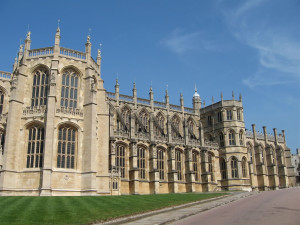
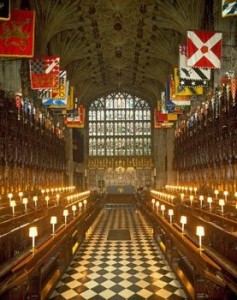
Windsor Castle - St. George's Chapel exterior    Windsor Castle - St. George's Chapel interior

Other Windsor Castle points of interest

Queen Mary’s Dollhouse –

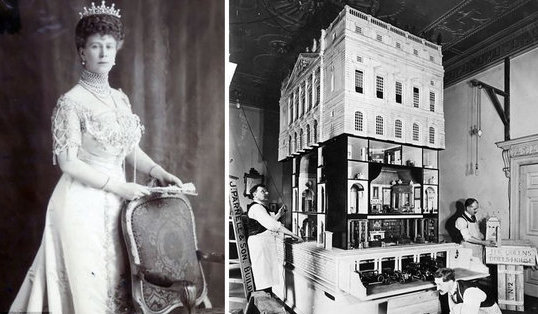
Displayed in a special room located in Windsor Castle is the Queen Mary’s Dollhouse which is considered one of the largest and most famous dollhouse in the world.  It was originally built for Queen Mary, the Royal Consort of King George V, who is the grandmother of the current Queen Elizabeth and it was built between 1921 and 1924 by one of the leading British architects of the time, Edwin Lutyens, as a gift from the British people.  It is a wonderful example of a miniature aristocrat’s house created on the scale of 1:12 (one inch to one foot).  The house is filled with thousands of details, such as furniture, draperies and carpets which were made by finest English craftsmen and the dollhouse also is complete with electricity for lights, running hot and cold water and fully equipped bathrooms.  The library is filled with original stories by well-known writers such as Arthur Conan Doyle, J.M Barrie and Rudyard Kipling which are bound into miniature books.  In addition, the dollhouse is filled with fine china and silver, monogrammed linens and even miniature cars in the garage with engines that actually work.  The dollhouse also features a hidden garden that is revealed when a large drawer beneath the main building is opened, the garden is a traditional English garden complete with miniature greenery and garden tools.
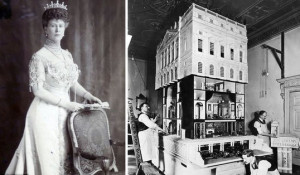
Queen Mary's dollhouse

The 1992 Fire at Windsor Castle

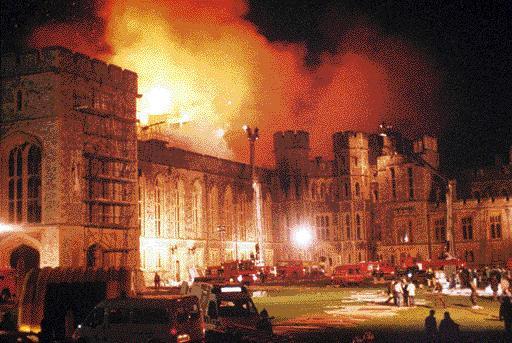
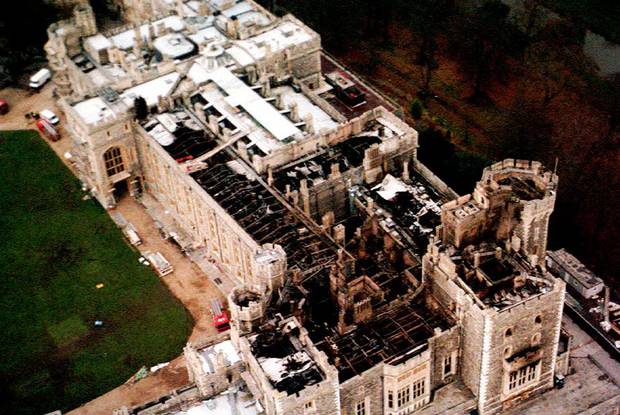
The former site of Queen Victoria’s Private Chapel is where the 1992 disastrous Windsor Castle fire started and it has been reported that a work light had fallen and set fire to the curtains near the altar causing the fire that would quickly spread to other areas of the Castle.  More than 200 firefighters battled the fire for over 12 hours and it was the worst disaster in the castle’s history.  Luckily when the fire was first detected the castle staff was able to empty the rooms of many valuable paintings and decorative pieces.  During the lengthy five year restoration process to repair the fire damage, the rooms in this area of Windsor Castle were rebuilt to resemble their original appearance using modern materials and concealing modern structural improvements whenever possible.  It was a very costly project and at first it was said that the British taxpayers would finance the restoration but the public was outraged at the idea.  Ultimately, it was decided that both Buckingham Palace and Windsor Castle would be partially opened for seasonal tours to raise the funds required for the restoration project.  On November 20, 1997 Queen Elizabeth and Prince Philip held a ball to mark their 50th wedding anniversary and officially reopen Windsor Castle.
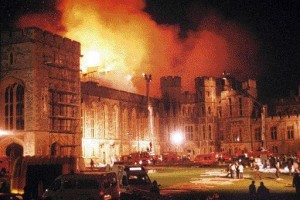
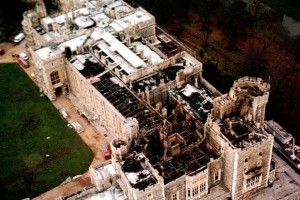
Windsor Castle fire 1    Windsor Castle fire 2

Travel – Windsor Castle (Part One)

Windsor Castle - etching

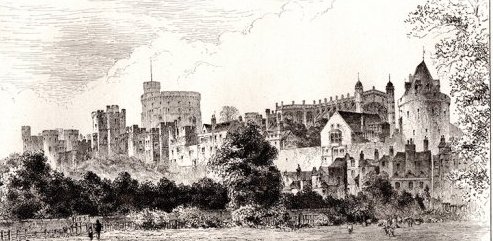
Windsor Castle is a British Royal residence located about 22 miles from Buckingham Palace, the monarch’s official London residence.  Because of the relatively close location to the city, Queen Elizabeth frequently spends her weekends there when she is not required to be in London for formal appearances or special occasions.  In Windsor Castle Part One, I will discuss the history of Windsor Castle which dates back over 1000 years to when it was built shortly after the Norman Conquest.  In Part Two, I will discuss the architecture of the main buildings and give a short tour of some of the rooms inside the castle as well as St. George’s Chapel and the surrounding grounds of Windsor Great Park.

The history of Windsor Castle

Windsor Castle was built by William the Conqueror when he was establishing a line of defensive fortifications around London shortly after the Norman Conquest in 1066.  The site for Windsor Castle was located within an easy 20 mile march from the London and conveniently positioned on the River Thames, which at the time, was a main medieval route through England.  The castle was also located near Windsor Forest which had been a royal hunting preserve used by the previous Saxon kings.  The first building constructed on the site was a wooden structure known as a keep, which is a fortified tower built within a castle, set on the top of a man-made mound and protected by an outer wall.  A second structure was later built to the east forming what is known as the Upper Ward and several years later a third structure was built to the west, known as the Lower Ward, thereby enclosing the entire castle.

The first royal resident to use Windsor Castle was King Henry I (reign 1100-1135).  During his time, the mound on which the original keep was built had begun to collapse and it was reinforced with timber supports and stone, also a low protective wall was added.  Later, King Henry II (reign 1154-1189) ordered an extensive refurbishment of Windsor Castle.  The original wooden keep was completely replaced with a stone structure and the mound was again reinforced with a new massive stone foundation.  The wooden walls surrounding the Upper Ward where replaced with a stone walls and the King’s Gate was built.  The interior castle buildings were also completely reconstructed in stone.

Then, during the reign of King John (1199-1216) Windsor Castle was besieged, meaning armed forces surround the castle, in 1214 during the time known as the revolt of the English Barons.  From Windsor Castle, King John held negotiations to settle the disagreements before he eventually signed the Magna Carta in nearby Runnymede in 1215.  A year later, the castle was again under attack by the baronial troops which were then aided by the French, Windsor Castle held and the outside forces were defeated.  But, during the second siege, the castle was severely damaged and extensive repairs were required to strengthen its defenses, the construction lasted from 1216 to 1221.  At that time, the stone walls of the Lower Ward were rebuilt and three new towers were constructed; the Curfew, the Garter and the Salisbury towers.  The Middle Ward was also heavily reinforced and an additional stone wall was built with the Edward II tower at one end and the Henry III tower on the other end.

King Henry III (reign 1216-1272) built a lavish palace in the Upper Ward in the years from 1240 to 1263 and Windsor Castle eventually became his favorite residence.  New buildings were built in the Lower Ward which included the Lady Chapel, a large 70 foot long chapel built on the south side, and repairs were done to the Great Hall with a new kitchen; but unfortunately the Great Hall was destroyed by a fire in 1296.  With these new changes made to Windsor Castle there became a distinct division between the Upper Ward which became an area that was part of the royal family private residence and the Lower Ward which provided a public space for royal ceremonies and other events.

During the reign of King Edward III (1327–1377) he established the Order of the Garter in 1348.  Since Windsor Castle would be the headquarters of this new order, the King planned to have the castle completely renovated to reflect a more lavish style.  Between 1350 and 1377, an exorbitant amount of money was spent on the construction of the new castle and on the interior design with expensive furnishings and other decorations.  In addition, three new buildings were built; the Little Cloister, King’s Cloister and a Kitchen Court in the Upper Ward.  In the front of the main portion of the castle; the St. George’s Hall, the Great Chamber and the Rose Tower was constructed and designed for the king’s private use at the west end of the castle.  In the Lower Ward the Lady’s Chapel was enlarged and renovated.

St. George’s Chapel, which had begun construction in 1461, was finally completed during the reign of King Henry VII (1485-1509).  St. George’s Chapel was built in a Gothic style of architecture in the Lower Ward.  St. George’s Chapel is dedicated to the patron saint of the Order of the Carter, which was an organization that had become inactive during the previous century but had recently been revived.  The Order is the oldest British order of chivalry and St. George’s Chapel at Windsor Castle is where the traditional Garter ceremony takes place; today the ceremony is still performed every June.  (For more information on St. George’s Chapel, please click on the link to Windsor Castle – Part Two)

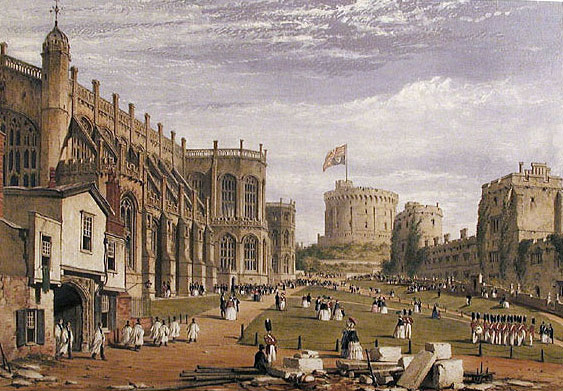
Windsor Castle - St. George's Chapel 1848

At the beginning of the 16th century, the young King Henry VIII (1509-1547) was in power.  In addition to Hampton Court, King Henry also frequently visited Windsor Castle.  In keeping with his active lifestyle of hunting and jousting, the king also enjoyed the game of tennis and he had a tennis court constructed near the base of the mound near the Round Tower in the Upper Ward in 1510.  Originally, due to his close association with Cardinal Wolsey, the King had commissioned the Lady Chapel to hold an elaborate mausoleum built for his closest spiritual and political adviser upon Wolsey’s death.  After Wolsey’s failed in an attempt to seek an annulment for the King and his first wife, he quickly fell out of favor and was eventually striped of his power.  He died at Leicester Abbey before his scheduled execution and was buried in the abbey’s church.  The mausoleum was never completed and when King Henry died in 1547 he was buried in a vault under the floor originally intended for Wolsey and it is marked by a simple black gravestone in the Lady Chapel section of the St. George’s Chapel at Windsor Castle.

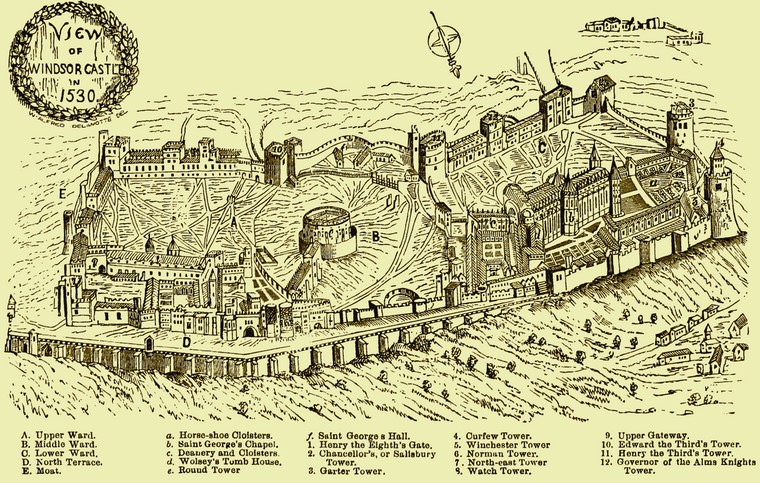
Windsor Castle 1530

In 1642, as England broke into a Civil War, Parliament became concerned that the troops of King Charles I (1625-1649) would advance on London and Windsor Castle was seized to protect the route along the River Thames.  Unfortunately, with troops occupying the castle, looting of many valuable gold and silver items were taken including the unfinished tomb of King Henry VIII.  Eventually the Earl of Essex used Windsor Castle as his headquarters and also parts of buildings were used as a prison to hold captured Royalists and the Lady Chapel held guns and ammunition.  In 1647, King Charles was taken prisoner and brought to the castle under house arrest before his execution in 1649; he was later buried in St. George’s Chapel.

Windsor Castle 1670s

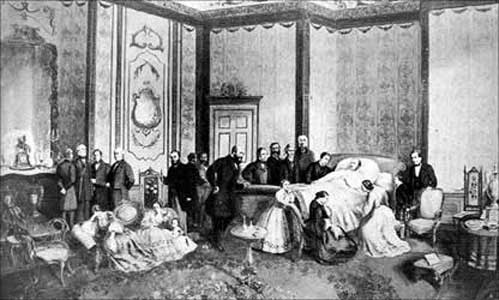
At the beginning of her long reign, Queen Victoria (1837-1901) and Prince Albert made Windsor Castle their principal royal residence and it was frequently used for entertaining foreign diplomats and nobility.  One major change to Windsor Castle came in 1848 when Parliament passed a law which limited public access to the grounds of the castle and roads were re-routed or closed within Windsor Park to allow a measure of privacy for the Royal family.  Modern improvements were eventually made to Windsor Castle during this time with interior running water provided by a nearby reservoir and initially only limited electric lighting was installed because the Queen preferred candlelight.  After the death of Prince Albert in December 1861, Queen Victoria made the room where he died a shrine and in her state of exaggerated mourning she ordered that it remain unchanged until her own death several years later.  Ultimately an elaborate mausoleum was built at Frogmore in Windsor Park as a lasting tribute to the Queen’s beloved husband and that it where his body is interred.

Windsor Castle - Blue Room where Prince Albert died

After the death of Queen Victoria in 1901, her son became King Edward VII (1901-1910).  The British monarchy moved from one that had been suspended in a period of prolonged mourning with a relatively somber court to one that became extremely active with almost constant activity and entertaining.  As a result Windsor Castle underwent a massive interior redecoration which eliminated the Victorian-style clutter and replaced with furnishing in Edwardian-style elegance.  Finally, the room were Prince Albert had died and in which Queen Victorian had made into a shrine all those years ago was finally cleared.  More modern conveniences were added during this time, such as electricity in all the rooms along with central heating throughout the castle and the installation of telephone lines which made communication so much easier and quicker.

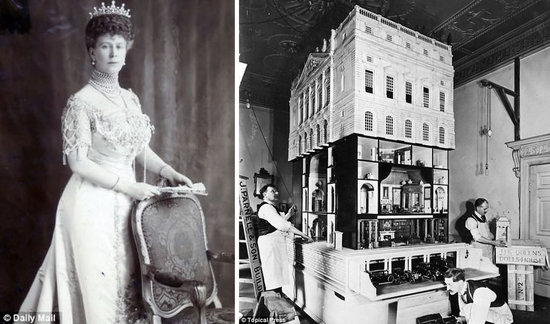
After the death of his father, King George V (1910-1936) set about further re-decorating the interior of Windsor Castle.  Queen Mary had a passion for collecting antiques and many pieces of furniture, paintings and other decorative items were acquired during this time.  The Queen also enjoyed collecting miniatures and the famous dollhouse which is still currently on display within a room at the castle.  It was designed by renowned architect Edwin Lutyens and furnished with miniature furniture and items made by British craftsmen.  (From more information about Queen Mary’s dollhouse, please click on the link to Windsor Castle – Part Two)

Queen Mary's dollhouse

In 1936, after the death of King George V his eldest son became King Edward VIII in January.  Unfortunately by December of that same year he had abdicated the throne with a radio speech broadcast from one of the rooms in Windsor Castle and his brother went on to become King George VI (1936-1952).  During his reign, King George revived the annual Garter Service which holds their annual ceremony annually in June at St. George’s Chapel at Windsor Castle.  (For more information of the Order of the Garter, please click on the link)

During World War II, Windsor Castle was prepared for war with tightened security.  Since the castle would be a major target for the German bombers, the structure was reinforced with sandbags to prevent any significant damage and the windows were blacked-out as a precaution.  In addition, valuable artwork and fragile items such as the crystal chandeliers were either removed or stored for safe keeping.  Although the King and the Queen remained at Buckingham Palace during the duration of the war their children, Princess Elizabeth and Princess Margaret, were moved to the safety of Windsor during the worst of the German bombings of London which became known as “the Blitz”.  The King and Queen frequently joined their daughters at Windsor on the weekends.  After the war was over it took several years to restore Windsor Castle, repairing any damages and returning the interior to its former grand style and pre-war condition.

After the death of her father, Queen Elizabeth II (1952 to the present) decided at the start of her reign that she and her family would frequently spend weekends at Windsor Castle when she is not required to be in London for formal appearances or special occasions.  Throughout the years, she has ordered continued maintenance of the castle and when necessary minor repairs to the exterior of the buildings as well as the grounds and periodic renovations of the interior rooms of the castle.

Then on November 22 1992, Windsor Castle was severely damaged in a major fire started while the Private Chapel in the State Apartments was being renovated.  It has been reported that a work light had fallen and set fire to the curtains near the altar causing the fire that would quickly spread to other areas of the castle.  More than 200 firefighters battled the fire for over 12 hours and in the end nine State Rooms had been extensively damaged and several other rooms also sustained minor damages, it was the worst disaster in the castle’s history.  Luckily when the fire was first detected the castle staff was able to empty the rooms of many valuable paintings and decorative pieces.  The five year restoration was very costly and at first it was said that the British taxpayers would finance the project but the public was outraged.  Ultimately, it was decided that both Buckingham Palace and Windsor Castle would be partially opened for seasonal tours to raise the funds required for the restoration project.  On November 20, 1997 Queen Elizabeth and Prince Philip held a ball to mark their 50th wedding anniversary and officially reopen Windsor Castle.
Windsor Castle fire 1    Windsor Castle fire 2
 

St George's Hall after the fire    St George's Hall, Windsor Castle Photo: EZM

For additional information, please check out Windsor Castle – Part Two which discusses the architecture of the buildings and give a short tour of some of the rooms inside the castle as well as St. George’s Chapel and the surrounding grounds of Windsor Great Park.

Personal travel note:  When we visited England in 1998, my son and I were able to tour Windsor Castle but not Buckingham Palace.  I highly recommend if you have an interest in British history or the Royal Family these tours are a wonderful idea.