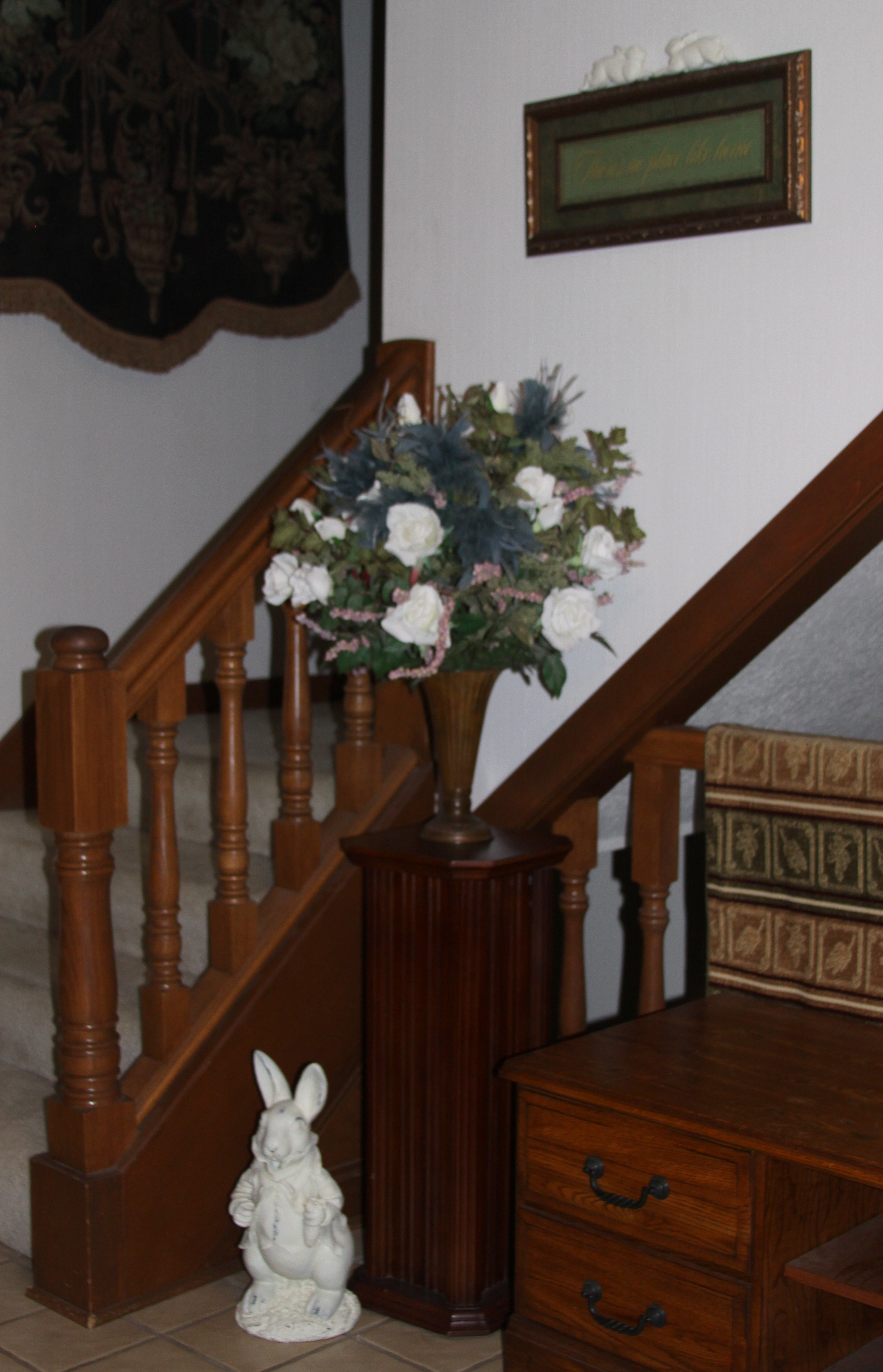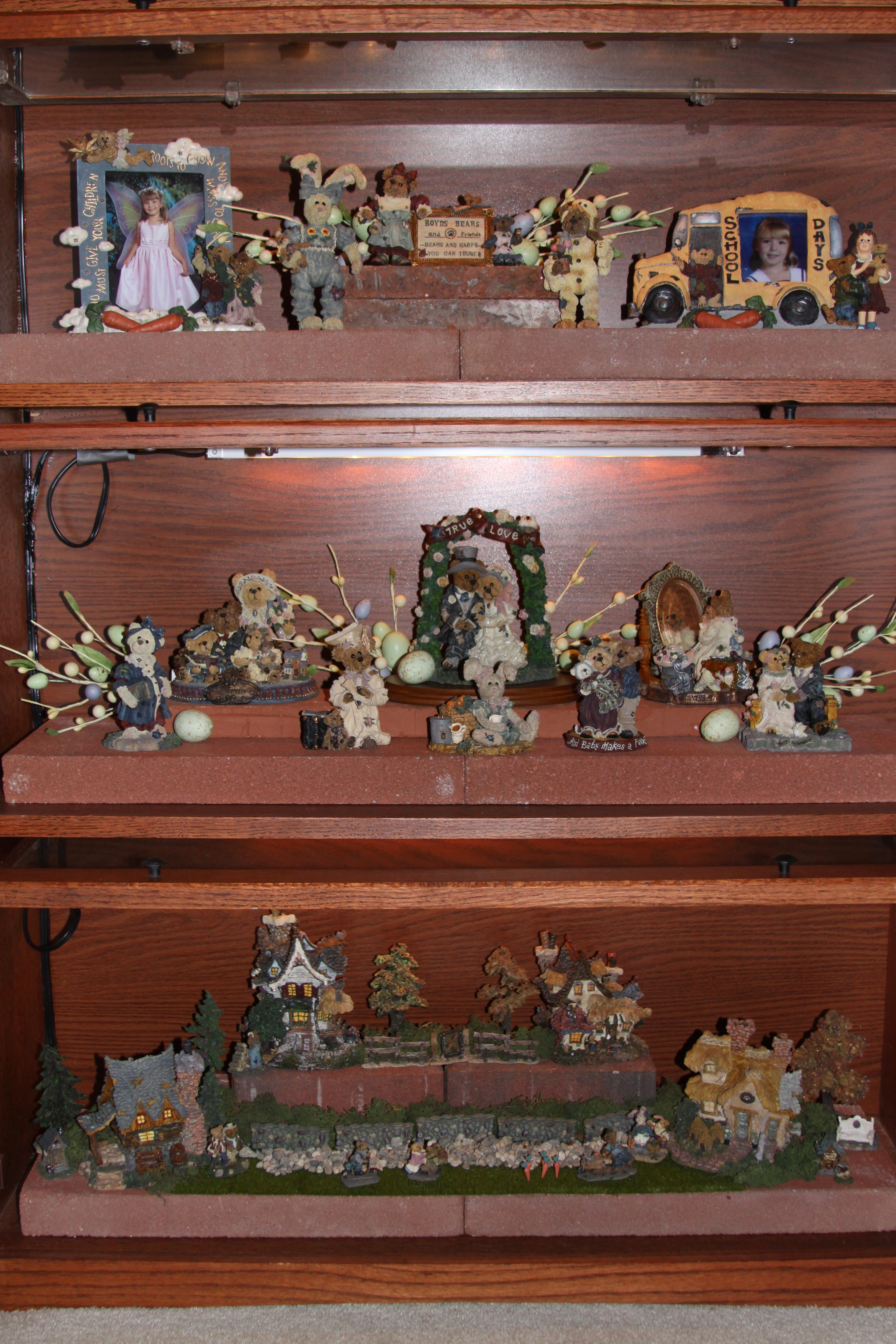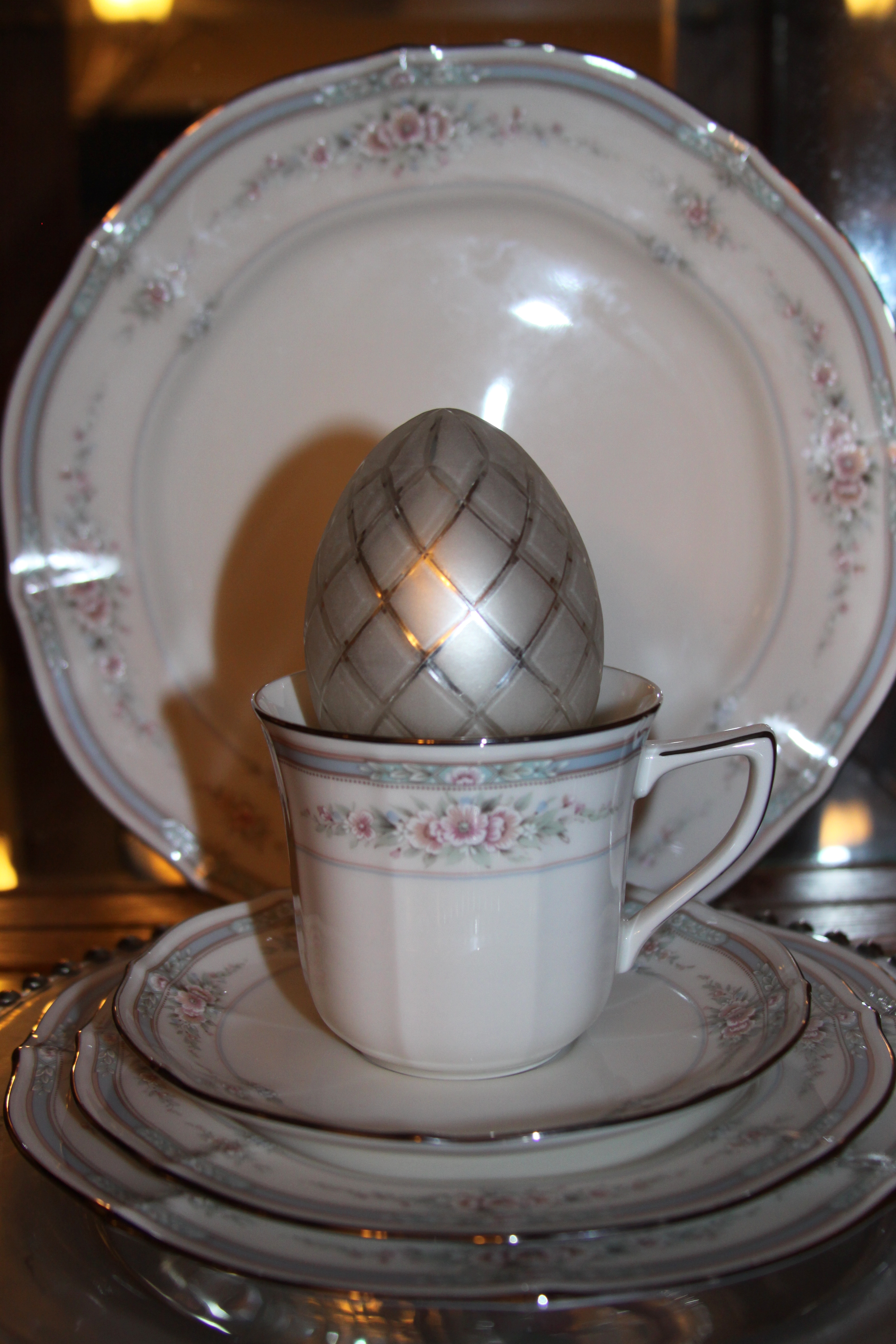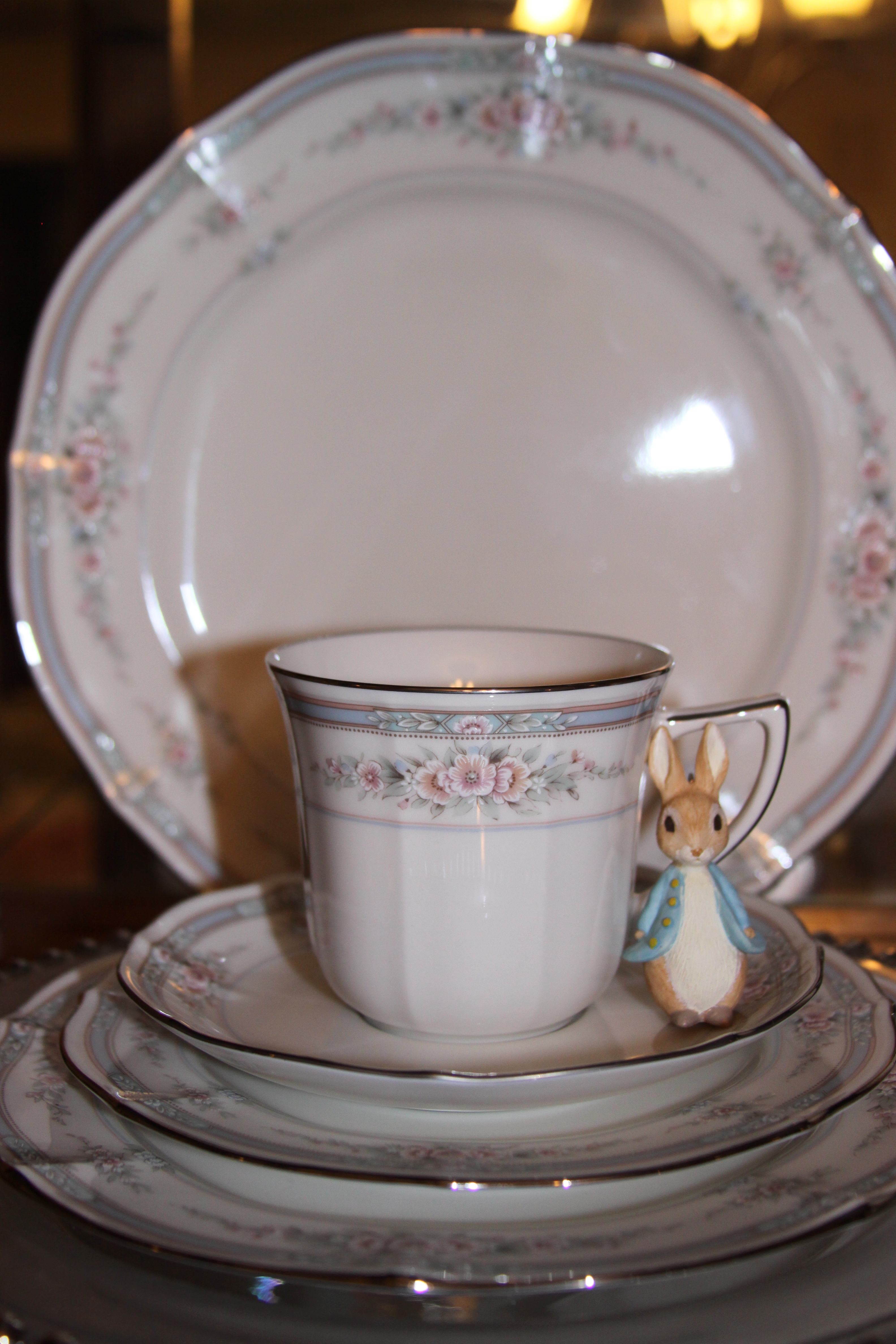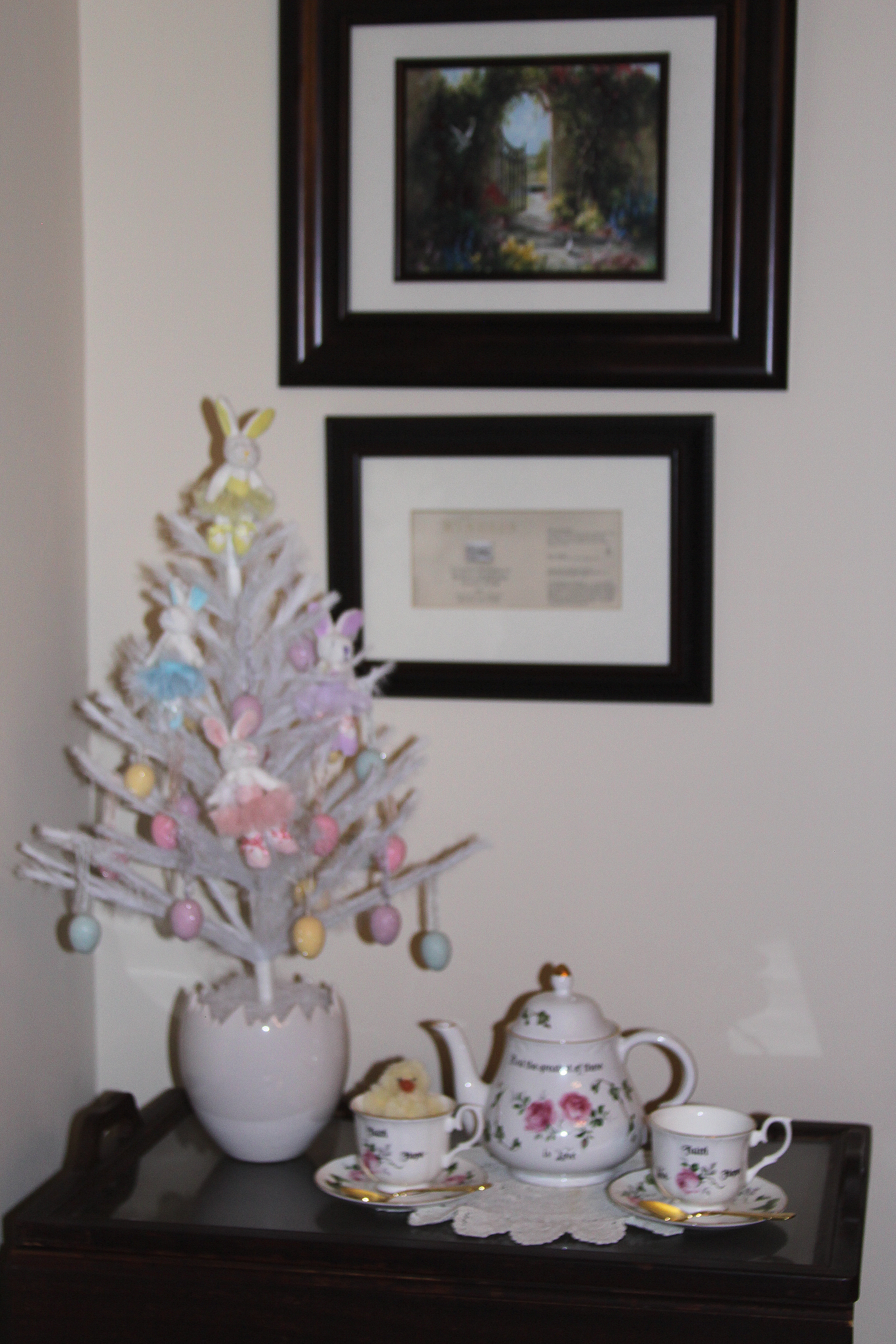
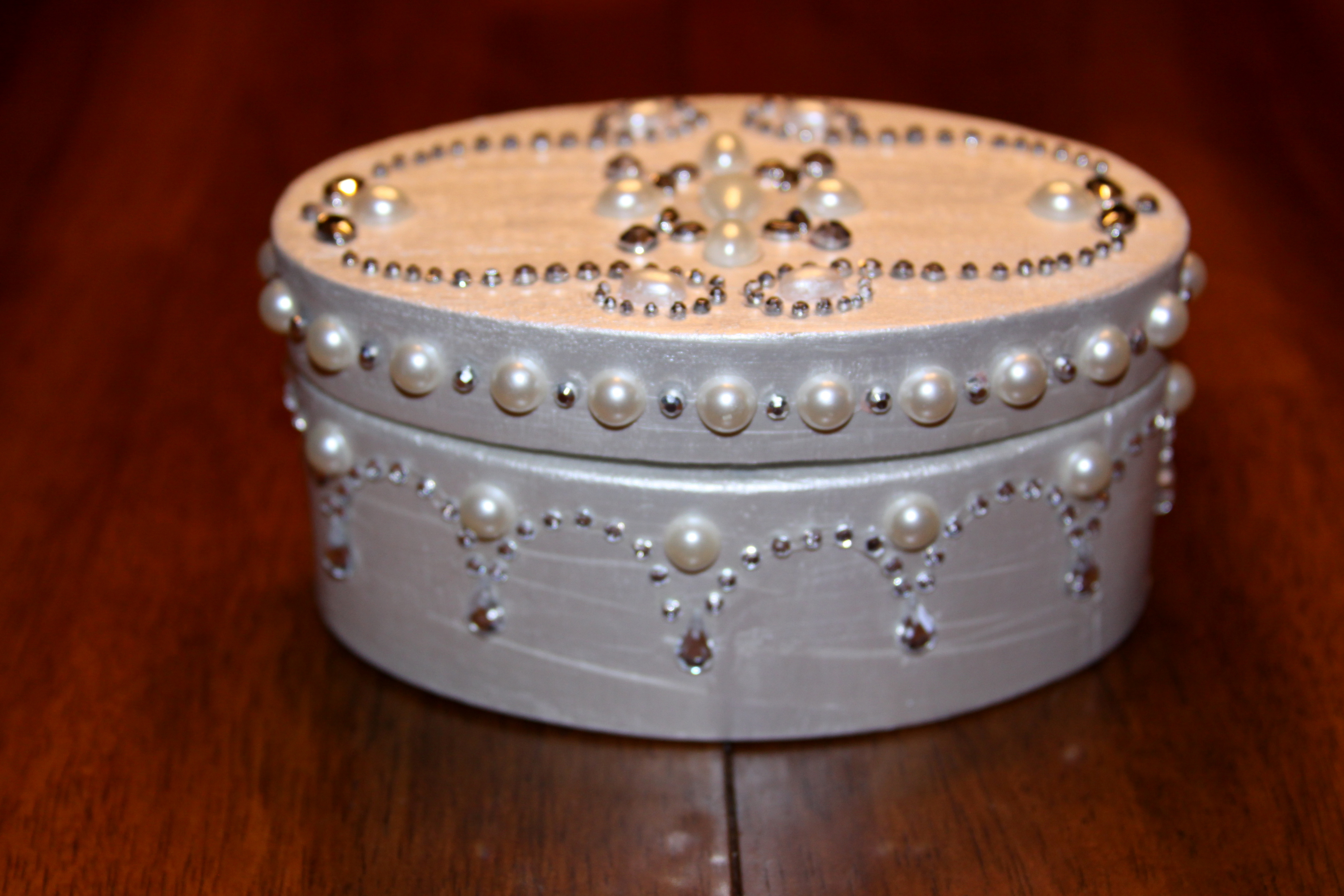
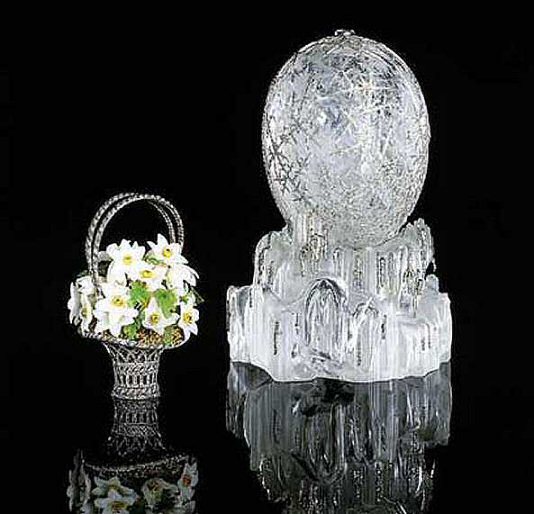
 In my Décor post, Faberge Eggs, this month I told the story of these beautiful eggs and their connection with the Russian Romanov family. Inspired by those Faberge eggs, I decided to recreate a simpler but still elegant oval “egg-shaped” wooden box that is painted and decorated with crystal and pearl stickers. This box will be displayed in our family room bookshelf during the Easter season.
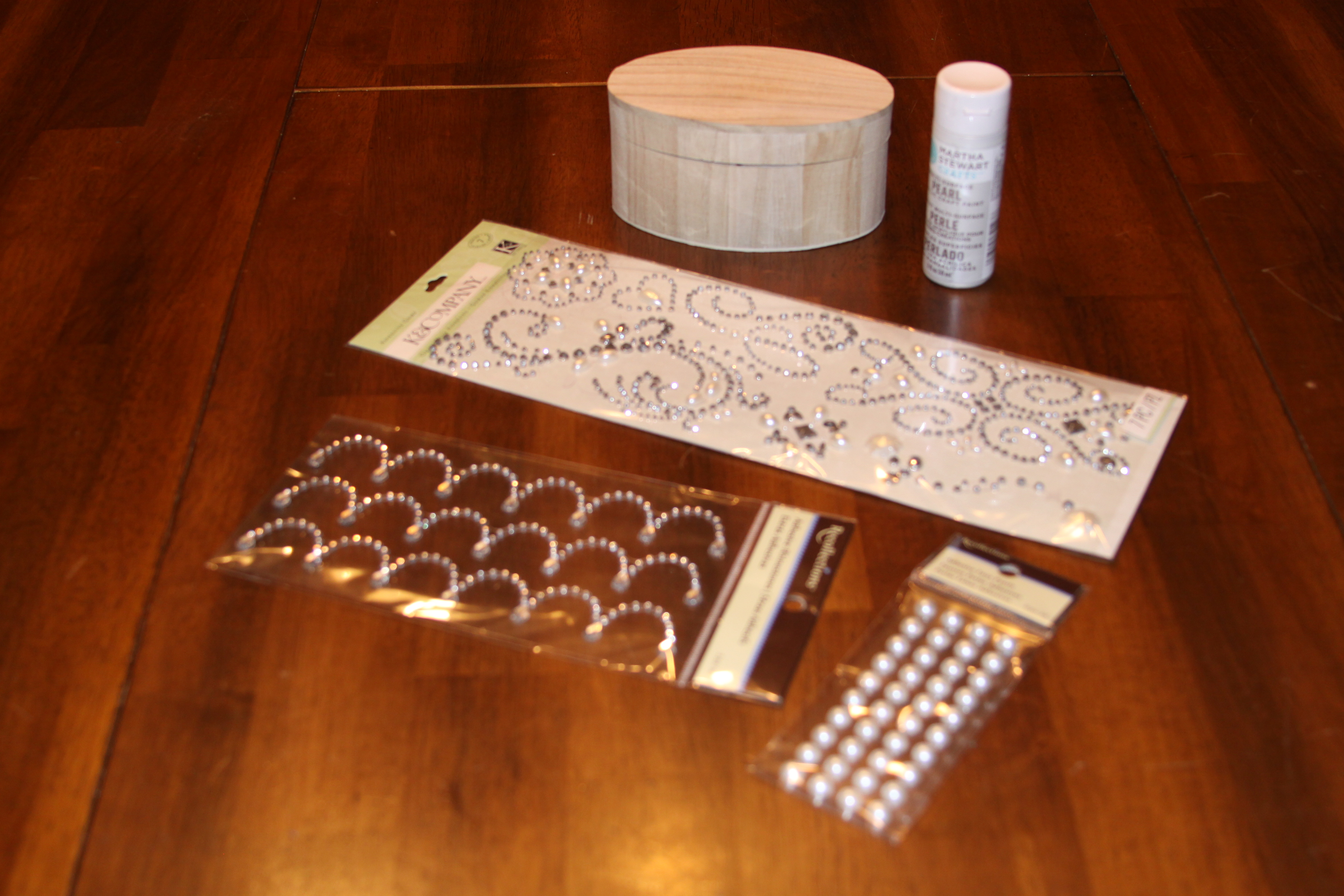 Faberge-inspired Egg Box – supplies
- 1 wooden oval-shaped box (I used an oval to mimic the shape of an egg)
- Sandpaper, used to prepared the rough surface of the wooden box
- Pearl paint (I used Martha Stewart brand pearl acrylic paint in Mother of Pearl)
- Paint brush
- Pearl stickers
- Crystal stickers
- Glue stick, to fix or repair loose pearls/crystals
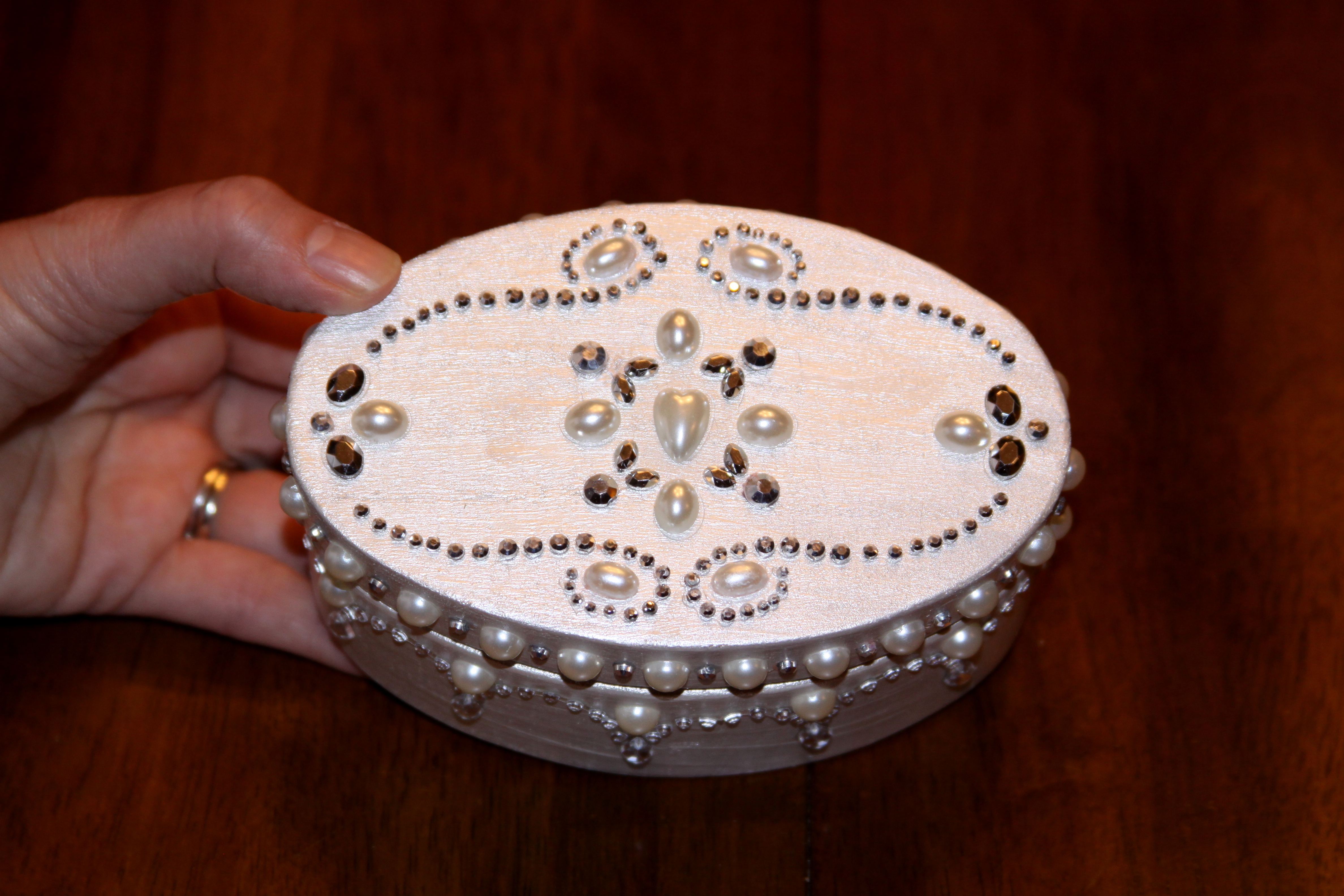
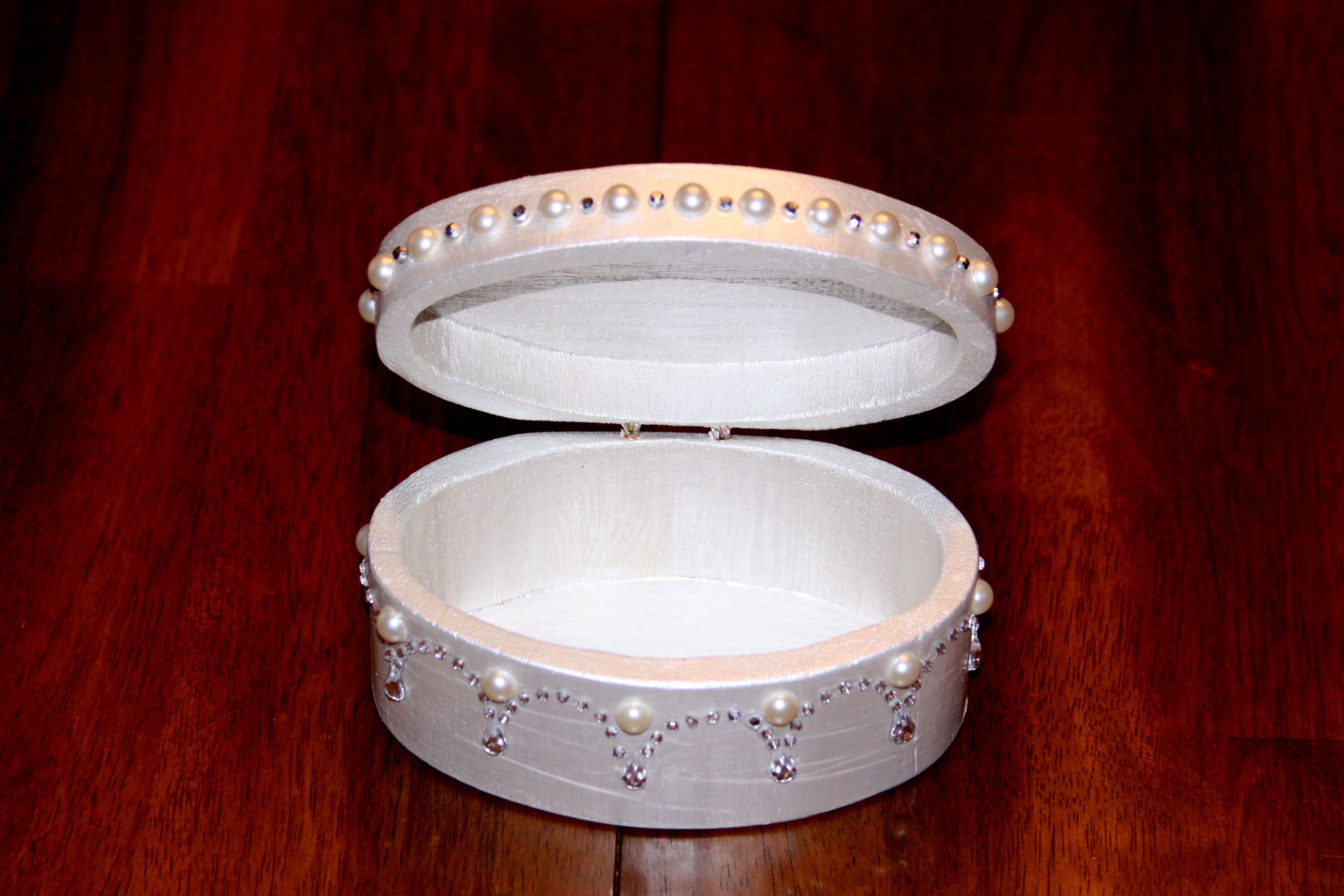
Faberge-inspired Egg Box – instructions
- Pre-determine the pearl and crystal sticker placement prior to painting.
(Sometimes stickers will come in an already established pattern as one application, like the one I used on the side of the wooden box. On the edge of the lid, I alternated with placement of an individual pearl and diamond design. On the top of the lid, I pieced together several different patterns for a nice combination) - Prepare the wooden oval-shaped box for painting, use sandpaper on all the surfaces, including both exterior and the interior of the box, to create a smooth surface.
- Paint the wooden box; let the paint on the different areas completely dry.
(I suggest painting the inside of the box first, then the bottom, then the sides/top) - Attach the pearl and crystal stickers in the different pattern combinations that were pre-determined ahead of time. If any pearl or crystals come loose, use a glue stick to re-attach.
Craft Tip: For the wooden box that I created, I used a simple color palette of Martha Stewart pearl paint in white with pearl and “diamond” crystals for an almost monochromatic look. Experiment with a color palette; using one, two or even three different colors, until you find the right combination that you like.
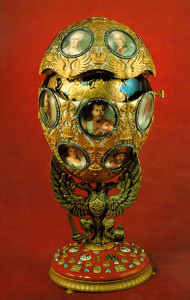
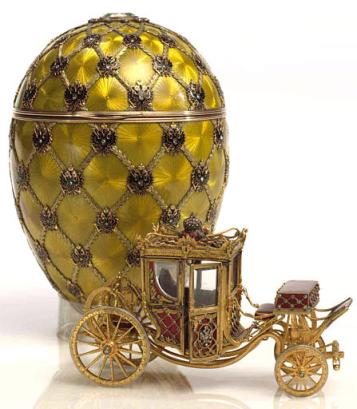
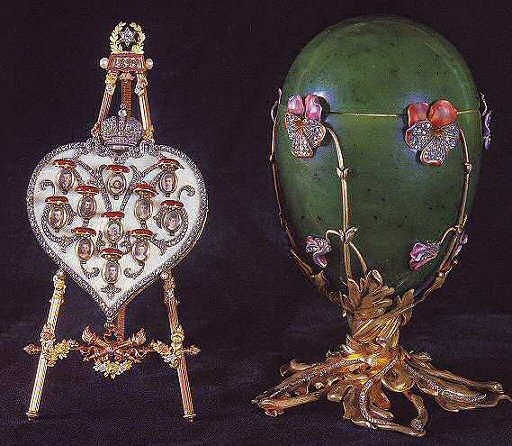
In a previous post on the House of Fabergé I gave a brief history of the company. Peter Carl Fabergé was famous for designing the beautiful jeweled Russian Imperial Eggs which were specially created for the Russian Tsar Alexander III and later his son Tsar Nicholas II between 1885 and 1917. In 2013 I published a post on the 54 Imperial Eggs that Fabergé created during that time. (For readers interested in more detailed information about the House of Fabergé or on the Fabergé Eggs, please click on the link to the previous blog posts)
In another post, I was inspired by the original Russian Imperial Fabergé Eggs, I decided to recreate a more traditional and elegant style. This idea started when I found the double eagle pendant in my local craft store. The golden eagle pendant has a large blue gem set in the center and accented with diamond-like crystals. I thought this pendant was a perfect inspiration for an Imperial Fabergé-style Egg. (For more information on this craft project with a supply list and instructions, please click on the link to the Faberge-inspired Egg post)
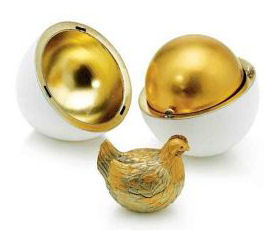 This first Faberge Egg created for the Russian Imperial family, known as the Hen Egg, was crafted in 1885 of gold with a white enameled shell which opened to reveal a series of delightful surprises. The first was a golden yolk which opened to reveal a golden hen which also opened to display a miniature replica of the Imperial Crown created in diamonds and rubies. (Currently, all that remains is the outer gold and enamel shell with the golden yolk and unfortunately the golden hen and miniature crown have been lost.)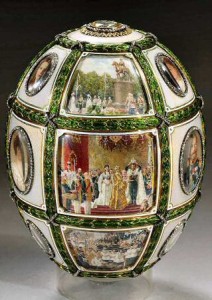
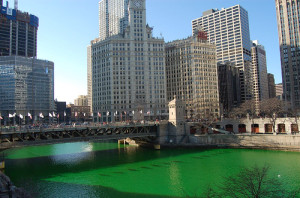 The first St. Patrick’s Day parade took place not in Ireland but in Boston in 1737. Later in 1762, to celebrate and observe St. Patrick’s Day, a group of Irish soldiers serving in the British military marched through the streets of New York City and expressed their Irish pride through their music with bagpipes and drums. Since that time, the Irish immigrates in America have held annual parades not only in New York City but also Boston, Chicago and Philadelphia. On very unique tradition developed in Chicago when in 1962 city workers, in an attempt to control pollution and trace illegal sewage leaks, released green dye into the Chicago River. This idea of dyeing the river has now become an annual event in celebration of St. Patrick’s Day.